Tucker on the Mountain (TGWP 2)
From the novel This Game We Play, by Greg Blake Miller
Part I, “A New Job” (Continued from TGWP 1: “The Oldest Rock in Mud Pony Lake”.)
1. The Mountain
I was sitting on a cliff when the phone rang.
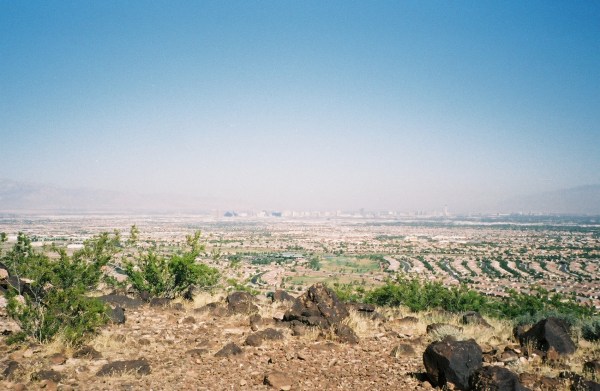
Beneath me, the valley sprawled in muddy brown and terra cotta red and a hundred pebbly shades of tan. The heart of the city was dark with mulberry trees. I’d spent my childhood beneath the branches when they were young and marked the edge of town, before the stucco tracts had spread like some inflammation of the skin. Ten years now I’d been away, grimly tinkering with the idea of growing up, and the valley floor had redrawn itself in my absence. Now, from the mountainside, I couldn’t pick out my boyhood home, my boyhood neighborhood, my nearest boyhood major cross streets. It was as if the city had swallowed them.
My parents had escaped—one is tempted to say just in time, but just in time for what I’m not sure—and now were living in a too-clean house on the town’s new edge. Ten minutes of indifferently paved highway to their east was the little stucco one-story to which I’d just moved with my wife and my baby boy. Everything had changed in the valley of my youth, but my folks were still just down the corridor. All I had to do was holler.
From my perch on the west face of Mud Pony Mountain, I could see their house, and mine too. There were no mulberries to hide the rooftops. We’d all moved someplace visible, a bulging belt of Zantrum Valley floor speckled pea-green with staked saplings in pink-rock yards. Beyond the belt, old ranches huddled here and there beneath cottonwood clusters, awaiting the final offer, the earthmover, the axe. A hundred thousand acres of beige crust and scrubrush and basalt boulders waited, too. The brown mountains waited. The lizards waited.
On my cellphone—the voice of my old friend Blum.
“How’s your mood?” asked Blum.
I could hear the sneakers squeaking behind him.
“Did you know,” I said, “That the bottom layer of schist on Mud Pony Mountain is 1.7 billion years old–”
“Tucker–”
“And that directly atop that sits a layer of limestone which is only 700 million years old?”
Blum sighed.
“Is that so?” he said.
“That is so.”
“Thank you for sharing that. Now–”
“Do you realize, Blum, that that makes for a one billion-year gap in the record?”
“Fascinating. Tucker, why–”
“They call it the Great Unconformity.”
“Are we speaking metaphorically?”
“No, geologically.”
“Where are you, Tucker?”
Blum could be a bit thick at times.
“I’m about a quarter of the way up Mud Pony Mountain,” I said. “They’ve got an informational plaque here. Pretty clear day. The city just sparkles.”
“Can you see the campus?”
“Hang on.” I put on my sunglasses. New prescription. “Yep. Sun’s glinting off the copper on Bumbry Tower.”
“Can you go to your car, sit down, and drive to Bumbry Tower?”
“Why? What’s happening at Bumbry Tower?”
“You know, Tucker,” Blum said, “you’ve turned out a real ass.” Then he hung up.
I put the phone down on a big rock and tried to think about the schist some more, but it was no use. I kept hearing Blum tell me I’d turned out an ass. You had to hand it to the guy. He knew me about as well as anybody.
The problem, and the reason I was an ass, was this: Blum was no longer just my old friend, but, as of that fall, my colleague. And not just my colleague, but my superior. Blum was the oldest and most-trusted assistant coach of the University of Zantrum Dust Flames basketball team. I was the youngest and least-trusted. Halfway across the wide brown valley, there was a gym in the shadow of Bumbry Tower, and my old friend Blum had every right to expect me to be there. At that moment, 12 tall young men in long shorts were sitting on a hardwood floor hugging their knees, rocking gently to 12 imaginary grooves, listening to a man much older than Blum tell them that March triumphs are born in October workouts.
“The question is,” he was saying, “are you satisfied with your October workouts?”
The old man would smile and turn and leave the gym, calf muscles churning like pistons. The tall young men would feel a little guilty. My friend Blum would look at them and shake his head and say, “He’s hurting, my friends. Make no mistake.”
Then, a deep, deep breath, let out very, very slowly.
“Understand, fellas, this could be his last year.”
It was October 14, 1999, and a new season was about to begin.
That year, as every year for the preceding half decade, the assistants were wondering whether the old man might announce his retirement, or perhaps die. There was nothing wishful to this thinking, I think. It’s fair to say most people adored the old man. Adoration, however, did not preclude a strong interest in the line of succession. Blum’s chief concern was not that the program fall into his hands, but that it not fall into the wrong hands.
My friend Blum was 40 years old. He had lived his entire adult life in the Zantrum basketball program. He’d never married; he had no siblings. His mother had died when he was 15, struck by a linen truck on a skinny Bronx sidestreet. His father had died more conventionally, of heart disease, when Blum was 21. Zantrum basketball was the only family Blum had. He’d been a bruising reserve forward (as the Zantrum fans recall) or a thug (as his opponents recall) on our 1977 and ’78 national championship teams. Now he was a towering, pudgy, bearded sentimentalist, the “hugger” every staff needs. He’d been the old man’s assistant for 18 years, and in those years he’d celebrated two more national championships. He’d eaten about a thousand meals at my family’s house. Blum was like a big brother to me, though I had one of my own. Apparently, I just couldn’t get enough of that sort of thing. I’d met Blum just before that ‘76-‘77 season, when I was six years old. I’d latched onto him and never really let go. I knew him well enough to know what he was up to down there in the gym that day while I was sitting on Mud Pony Mountain. He was telling the players how badly their lack of effort was wounding the old man. He was telling them the old man deserved better.
The old man, I ought to tell you, was my father.
When they weren’t calling my father the old man, they called him Coach Ax. Al Axelrod had been coaching the Dust Flames for 29 years. He was, by most everyone’s estimation, or mine at least, one of the best coaches that ever lived.
Continue reading: TGWP Section 3: “The Old Man and the Gym.”
The Oldest Rock in Mud Pony Lake (TGWP 1)
From the novel This Game We Play, by Greg Blake Miller
Prologue
It was bad enough that my father was older than me. When I found out my older brother was older than me too, I knew I had a thing to contend with. When Simon was 11, and I was just six, he took to playing afterschool basketball with a pair of big boys down the street, and I was not invited. It was winter; my father was on the road and my mother was tired. I think she and I shared a sense of being left out. In any case, we spent those afternoons together in a drowse of suspended anxiety. She’d lie down and let go the tension of being as good in our small world as Dad was in the big one, and I’d lie down with her, my head on her belly, and listen: Bubble, gurgle, plink. I thought it was the sound of calm, and whenever I heard it the prospect of my never making it down the street to play ball with the big boys seemed a whole lot less troubling.
The sound, though, was not as portable as one might hope, and I spent most of that winter wondering at my smallness and edgy with the desire to amount to something special. I monitored the world for ballplayers with my name and stories where the younger son made good. I did a semblance of pushups on my bedroom floor. I developed a taste for genie myths and swords in stones and the idea that there were very, very old things that, when stumbled upon by the pure of heart, would share the secrets of the ages. By springtime my father was around more and I thought about these things less. But I still thought about them. I was thinking about them, in fact, that first hot Saturday as we rumbled to the lake in Dad’s cozy old shoe of a tan Ford sedan.
The down-the-street neighbors were waiting when we got there. Those two big boys came rushing at Simon waving some magazine like a captured flag. “Check it out! Check it out!” Their big father snatched it from them, though, and grinned at my parents through a mask of sunscreen. He shrugged. He waved a meaty paw. He slapped my father on the back. My mother, he hugged. The two boys put each other in headlocks and punched each other in the arms and set to emptying our car. They pulled the cooler from the trunk, and the bucket-and-shovel from the back seat, and the Nerf football, and the flying disc, and the small plush giraffe I’d brought in the car but hadn’t intended anyone to see…
+++
If you turned away from the two cars in the little dirt lot and looked into the baking distance, everything seemed wild and untouched. Mud Pony Lake was a good 20 minutes of raw southwestern desert from anyone’s house; it sat sheltered from the city on the far side of jagged-backed Mud Pony Mountain, the tallest and barest peak in Zantrum Valley. I’d heard somewhere that the mountain was almost as old as Earth itself, and that it used to be twice as tall before a quake shook the top half into the lake. This, of course, intrigued me, and I left the big boys playing Frisbee and the grownups talking business and went searching for a rock from the beginning of time.
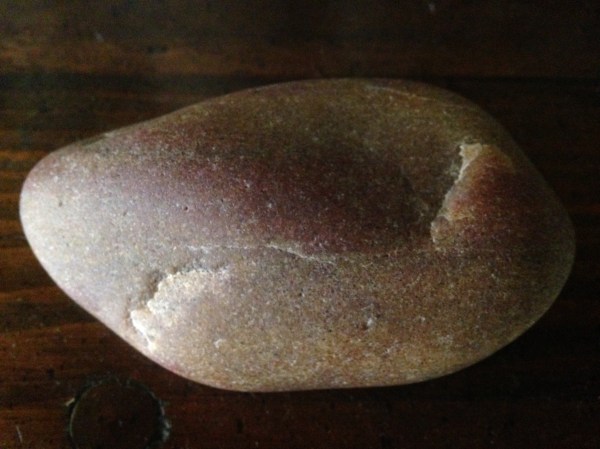
Mostly I saw ovals; they were pink and gray and neat and smooth and they all looked a little too new. I picked one up, admired it, put it back with whispered respects, ambled on in shallow clear water, eyed the stones each sloshing step, let the lake keep them, looked for the one that measured years not in millions but billions. Then I saw it, brick-like and fist-sized beneath a half-foot of water, and I took it and I turned it over in my hand and I knew I’d found the rock from the very start. Nothing so pretty, but it had a slick plane that broke off at a wounded spot and showed the time-striped insides, and I told myself, This is the one that’s weathered all the adventures. The rock was cool and wet on my fingers. I stood there moving my thumb across the jagged edge and feeling big and small at the same time.
One of Simon’s friends tromped toward me in the sand, dragging his big bare feet and spraying grains up in the air and into my eyes. He asked me to see my rock and gave it a good once-over and told me, It’s good for skipping, and I, not sure what he meant, said, It is?
“It sure is,” he said, and he side-armed it out into the still blue water. I watched it bounce at 20 feet, 40 feet, 60 feet, gone.
“Isn’t that cool?” he said, and I understood he’d meant no harm, but I felt harmed. I nodded and walked away.
Simon came up to me, sun-browned and snake-slim, quick on his feet, no sandsplatter, just the quiet approach of authority, big hard brown eyes full of reason and justice and the will to make things right. A sense of responsibility. Simon could be relied on to put straight the things others let slide. He’d taken one look at me from across 10 yards of sand and coolers and he knew he was needed.
“What’s wrong?”
“Nothing,” I shrugged.
“Don’t gimmee that. What’s wrong?”
“He threw my rock.”
“Where?”
“Out there.”
“What did it look like?”
I told him.
“I’ll get it,” he said, and walked off into the water like a god with gills.
My father had overheard us.
“Don’t go that far, Simon!”
Simon kept going.
“Come on back, big fella!”
Dad had a sandpaper throat and a warm, smoky tone, though he’d never smoked. I loved that voice; I gave myself sore throats trying to make it come out of my mouth.
“It’s too far out, Simon!” my father shouted. “We’ll find another rock!”
But Simon was gone, under the blue, way under the blue, holding his breath or breathing the water or whatever the heroes do.
“Simon!!!”
Simon wasn’t listening.
Dad tousled my shaggy yellow head. Sand fell into my eyes.
“Simon’ll get you that rock,” he said. “Don’t you worry.”
“It could have lived at our house,” I said.
My father took a deep breath and let it go and squinted out at the lake. “It may yet,” he said.
Now my mother was shouting:
“For God’s sake, Al, go get him!”
“He’s fine!” my father said. He was suddenly cleansed of his own concern, or pretending it well. My father was most always a cool customer, but never more so than when my mother was worried.
“He’s too far!” Mom said.
“He’s getting Tucker’s rock.”
“Why doesn’t Tucker get another rock?”
“That’s the one I picked,” I said.
My father looked at my mother and shrugged. “That’s the one he picked,” he said.
I looked at my mother and shrugged just as Dad had, and my mother smiled at me and put her hand up over her brow and looked out at the water. She was calmer now. I think she wanted very much for Simon to find my rock.
“Simon!!!” Dad shouted.
+++
A slick brown head, eighty feet out. A sunbrowned arm punches out of the water in triumph, something shiny clutched in strong fingers. Simon rises on the water, his bony back glints in the sun, and he’s under again, on his way to me…
The rock is not mine. It’s the most beautiful rock I’ve ever seen. It’s blue and green and yellow and red. It’s oval as an egg and smooth as glass. But it’s not mine.
Twenty-five years later I keep the rock on my hutch right next to the other good stuff—a picture of Priscilla from the month we met, an old bit of basketball net, a six-month portrait of my little blond boy. I treasure this rock but long for my rock, the rock I found, the one I picked, the one from the beginning of time. I wish I’d taken it upon myself to disappear into that water and find what was mine. I don’t even remember what color it was. I’m not sure if I’m imagining here a completely different shape when I try to describe my rock. I don’t remember much about it at all. Only that it was mine, and then it was gone…
+++
Mud Pony Mountain went pink and then purple in the afternoon light. I did not let go of Simon’s rock all afternoon. Those big boys didn’t bother me anymore. We piled in the car and headed home, grimy and exhausted as the city lights rose up to meet us. Simon looked proudly at the rock in my hand.
“It’s even better, isn’t it?” he said.
I shrugged and smiled and looked him in the eye and thanked him.
The Once & Future Rebels
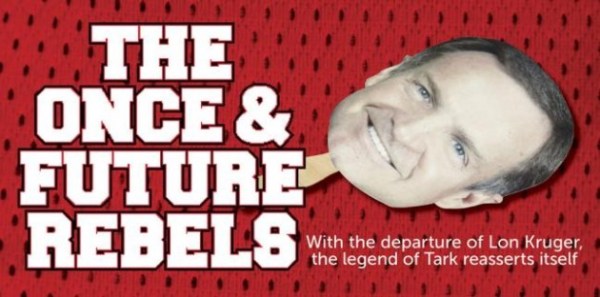
As the UNLV men’s basketball program heads into another coaching search, it will be fascinating to see the way interest groups form around different candidates—and the way history and legend are leveraged by those groups. It may sound as if I’m talking politics, but, well, I am. Culture matters, and in Las Vegas, culture and UNLV basketball are intimately intertwined. Here’s a link to the feature, “The Once & Future Rebels,” that I wrote the last time our city came to this juncture …
Closed City
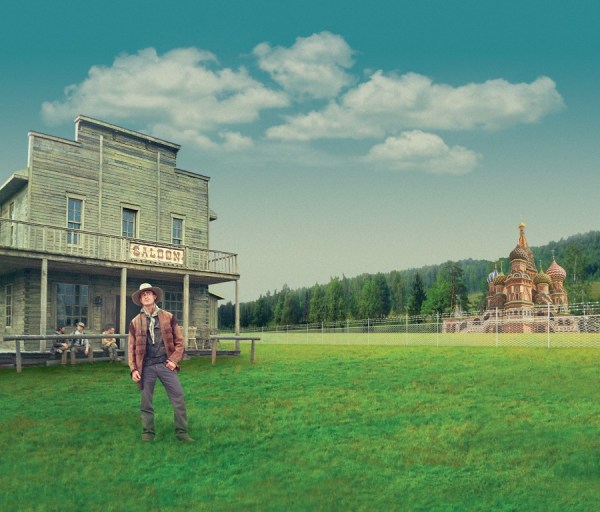
Adventures in the Muscovite film trade, 1993 …
“The set was on a military base; a legendary Russian designer had built a replica Western town where even the Man With No Name would have felt comfy enough to chew his cigarette and shed some blood. I spent hours teaching a wonderful Russian actor named Boris to walk into a bar, fix his eyes on the villain and declare, “You’re the only man I ever met who sunk to the bottom and then went lower.” The lines would be dubbed, but I had to get his mouth working the right way. Besides, I was from Nevada, and I assumed I could get him to talk like a cowboy.”
Read more in my story, “Closed City,” in Vegas Seven.
The First Chapters of the Book of Tark
When the legen dary UNLV basketball coach Jerry Tarkanian died on February 11, 2015, he left a legacy that had transformed not only a basketball program, but a city. In “The First Chapters of the Book of Tark,” I discuss his early years in the desert, the dawn of an era in which he helped shape Las Vegas—and Las Vegas shaped him
Revolution Square
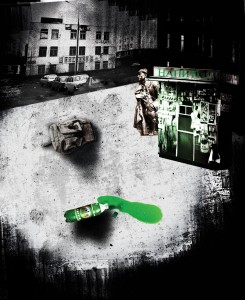
“The decades were watching—a statue of a crouching man with a German shepherd, a bronze girl with a baby on her shoulder. The dog’s nose was golden from the touch of Muscovite hands. It was said to be good luck. I did not touch the dog; one must be careful with watchful dogs. The escalator out of the Revolution Square metro station goes up forever. One feels like Aeneas leaving the dead, the watchful dead, behind.”
A true tale of a dark Moscow night, a bottle of green soda and a room without a view. From Vegas Seven magazine, this is Revolution Square.
The Glorious Rise of the Pigskin Empire

Yes, it’s a weekend for NFL football and high-anxiety over Ukraine. Some things never change. From the Archives, a disturbing September 2014 hallucination about point spreads, Vladimir Putin, and—what?—pro football in Vegas
By Greg Blake Miller
IT IS SEPTEMBER, and all of world culture—the painters and poets, sinners, saints and stock traders— have turned their eyes to the gridiron. Since my childhood, the word has summoned up images of a heavy black metal device used for cooking chicken, sort of a proto- George Foreman Grill. Alas, the word actually means “beer.”
In Europe’s smallest nation-state, the red-capped cardinals of the Vatican sit down to watch Arizona play New Orleans, wondering how to aim their prayers, because as any NFL player can tell you, God answers all football prayers, and because it is difficult for a cardinal to choose between a Cardinal and a Saint. If only Notre Dame were in the NFL, all would be clear.
In the gilded hallways of Moscow’s Kremlin, Vladimir Putin and Dmitry Medvedev can be spotted, huddled close in a shadowed corner, heads tilted downward, voices low, discussing the Tampa Bay- Jacksonville spread before getting Barack Obama to bite on the Jaguars minus-4 1/2, with all of Ukraine hanging in the balance. We should undertake to resolve all of our conflicts at the betting window.
In Germany, Angela Merkel declares that the immense global power of football resides in its counterintuitive use of “foot” to describe a game played chiefly with the hands. In an attempt to restore the flagging popularity of soccer from Bonn to Berlin, she issues an edict that the beautiful game will henceforth be known as handball. This angers two greasy guys playing old-school handball against a graffiti-covered wall in 1970s New York City. No one else, however, seems to mind. Except for one little kid who likes to run around telling his friends, “I’ll cut you so low you’ll play handball against the curb.” He has 37 years to come up with a new put-down.
Back in the present, Obama is trying to figure out how he got hoodwinked into laying 41⁄2 on the Jags. Ukraine is now fully under Russian control. Putin’s first move is to legalize sports wagering in Odessa, where football odds quickly become more popular than handball odds. The Donetsk Destroyers of the new UFL will soon travel to Las Vegas to challenge Vince Neil’s new indoor/outdoor coed lingerie team, the Outlaw Ace Silver Gamblers. It is a marvelous attempt at pigskin diplomacy, but it falls short when Valeria Mazza intercepts Colonel Igor Strelkov’s Hail Mary pass to secure a last-second victory for Neil’s team. Putin immediately declares sanctions against all Las Vegas-produced fuzzy dice—an ineffective measure since fuzzy dice, as everyone knows, are made in China. The U.S., however, responds by banning pigskin exports to the former Soviet Union.
“This does not concern us,” Putin grins, cool blue irises sagging low in the eye socket. “Pigs, we have.”
“Nothing,” he says, “will deny our people their football. And by that I do not mean handball.”
Of course not. He means beer.
Originally published in Vegas Seven, September 11, 2014. Greg Blake Miller is the director of Olympian Creative Coaching & Consulting—personal training for the creative mind. Visit OlympianCreative.com.
Images and original page layout by Cierra Pedro for Vegas Seven.
For Miller’s less flippant essays about Russia and Ukraine here on ReentryShock.com, please see:
• “Russia, Ukraine, and the Battle of Yesterday”
• “Harvest of Grievance”
• “Diplomacy’s Final Exam”

What I Learned | Vegas Seven
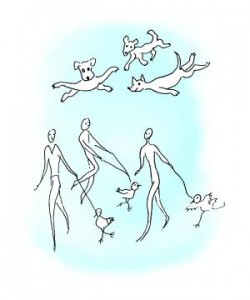
When we attempt to prepare our kids for the world, we have to learn not to exclude the world, in all its bewildering openness, from the conversation. After all, you never know what it might have to say. So it’s somehow fitting that when I sat down to write this Vegas Seven essay about the age of standardized testing, I wound up wandering off target and musing on my own dreamier days in the wild-blue classroom.
The Morality of Slow | Vegas Seven
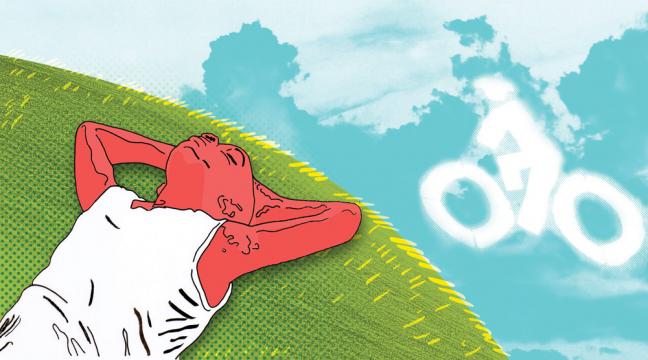 Thoughts on summertime, creativity and the meaning of intensity.
Empty Box Syndrome
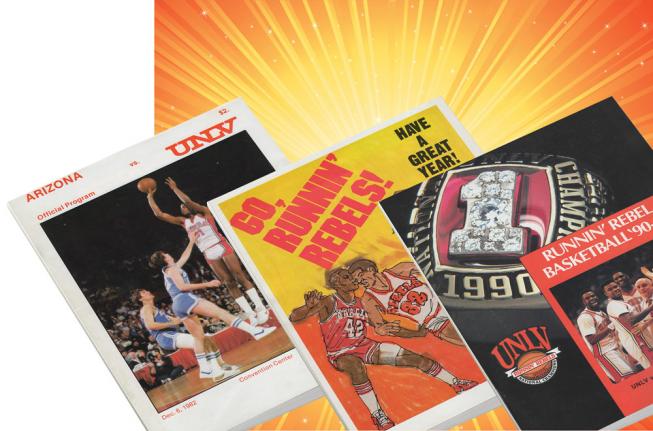
“I treasured those old basketball programs, but the box began to take on some kind of nasty symbolism, something about my mistaking the artifacts of living for life itself. That box—and it was a really big box—was taking up garage space that might otherwise be used for, say, winter clothing and emergency nonperishables. OK, the problem was less about storage capacity than psychic space; I suffered through insomniac nights picturing my future home library where the programs were shelved in chronological order in plastic slipcovers. In the mornings I looked in the mirror at my tired eyes and thought, This can’t be right.”
Read more thoughts on fandom, clutter and the enduring weight of precious things in “Empty Box Syndrome, or How I Learned to Stop Worrying and Let Go of My Old Rebel Stuff,” from Vegas Seven magazine.
 Reentry Shock