White Beard
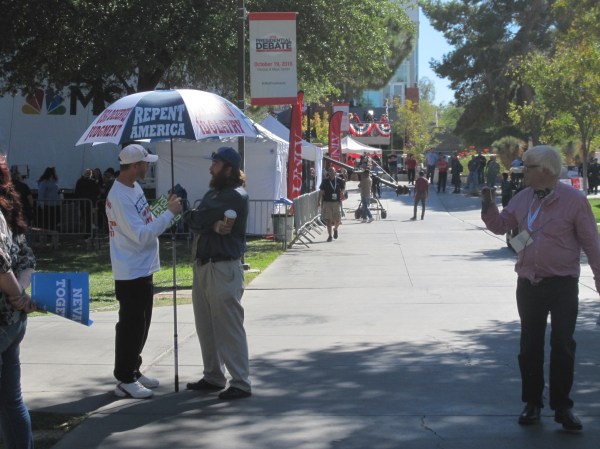
White Beard
A tale of bewilderment
He wasn’t old yet, at least not as far as he knew. By the newly accepted standards of aging, he was very much the equivalent of what a man 10 years younger than him would have been 10 years ago. This reckoning would put him in the prime of his life, in the treasured demographic of fully-fledged-but not-yet-middle-aged citizens of the Republic. But that morning he had woken up and realized that the night before, when the Nation had made its choice, his hair had, in more spots than ever, surrendered its applesauce-blonde and gone silver. The Choice, the Choice! He had been hoping to wake up, Scrooge-like, to the realization that the nightmare really had been only a nightmare, to check the papers, read the news of a different choice, and run to the window wishing all and sundry a happy November 9. Alas, he didn’t have to fetch the paper to strike down his hopes; that silver already told the story: Such hair is not the product of night visions. Only time can do that—and last night, those hours bent over the coffee table, occasionally sipping at a glass of lukewarm water, watching the insanely energetic people on television color in a map until well past three in the morning, had felt like a decade. Today he would have to teach. He wondered if those faces, with all of their 22 years of compressed wisdom acquired in a country forever unraveling and re-raveling itself, would have aged as well. Could the young, too, have acquired streaks of silver? Would they be ready to fight, rejoice, weep, or simply walk through to the end of this day, worn sneakers on gray concrete, and into the next, because they had choices of their own and could not be dismayed or derailed by the Choice.
He decided to talk not about the Choice itself, but rather about the way the insanely energetic people on television had presented, analyzed and autopsied the Choice. The Choice, after all, was a story, and these people were the Storytellers. Talking about the Storytellers rather than the story would provide a buffer zone between himself and the students and the Choice, a sort of ethereal cushion between the political and the personal, between the night and the morning, between the tale and the terrifying possibility that it was true. In any case, he decided, we can learn a lot about a poisoned well by discussing how we had learned of the poisoning: What words had the Storytellers used to describe the well? Did they name the contents of the noxious flask, or leave them to our imaginations? Did they say how exactly the poison had been brought to the well? Were there any eyewitnesses? Did the bedtime story end, as all bedtime stories must, with a soothing goodnight?
The students had not gone gray, but there was something ashy about the eyes, as if they had been staring too long into a fire. He tried to look young. He played at irony. His first words were, Good Morning!, admitting that something new had come along and poking fun at the absurd possibility of its goodness. The students were neither in the mood for morning nor for any implication of goodness, ironic or not. And yet they spoke. In general, they agreed that, after hearing the story of the poisoning of the well from the Storytellers, that the Storytellers themselves bore a stain of guilt that even the continued application of insane energy to no particular end (the task to which the Storytellers were, everyone agreed, most well-suited) would not cleanse. The tellers had told, the hearers had heard. Each type of teller had its own type of hearer. And once something had been heard, it could not be unheard; on the contrary, it was spoken and respoken upon the little personal screens the hearers liked to hold so that they could more often hear what they wanted to hear and denounce what they did not want to hear.
The gray-haired man—for by now he had gone entirely gray—stood before the students and pointed out where they were correct about the Storytellers and where, perhaps, they were being uncharitable, but he understood that this was not a time of charity, neither for the Storytellers, nor for anyone else. Those ashy eyes bored into him, swollen on the lower lids, perhaps, he thought, from tears, or perhaps from simple exhaustion with the whole ballyhooed and seemingly much-overrated Exercising of the Choice. Do you know, the eyes asked, how we feel? He replied to the silent question by asking the students, again, what they thought. They thought the numbers had been wrong all along and did not understand why. Why had the Storytellers been telling stories about numbers that were wrong? He asked them if perhaps the blame lay not with the Storytellers but with the Mathematicians, who had for more than a decade been encouraging a purge of the Storytellers for the crime of inexact science. He did not receive an answer, because they found the question both bewildering and uninteresting, and instead suggested that the well had been poisoned by the Other People.
The old man—for now the gray-haired man was old—was uncertain at first who the Other People were, but then he looked upon the eyes, no longer ashen but fierce, and understood that if he were to ask them it would be regarded as a trick question, since the definition of the Other People is different for every person. Still, the students at least shared a consensus that the Other People were clearly at fault, and it appeared that a certain peace might preside in the room, which, by the way, was terraced like a theater, with 30 young people in 30 chairs looking down at the old man as if he were a theatrical curiosity, like a clown in tatters or an elephant with a bow tied around its trunk or, more ancient still, Cro-Magnon Man attempting to explain the use of fire to an audience that had already discovered nuclear fusion.
Then a student took the audience away from him with the outrageous claim that the secondary Storytellers, those Hearers with their little screens, had been the true poisoners of the well, and that the things they had typed into their little screens might be stirring up an unrealistic amount of despair and that perhaps, just for the moment, until the next moment came with news of its own, the ashen eyes should be a little less ashen. If the ancient man, now tottering on a cane that had materialized as if from nowhere, had been given an opportunity, he would have explained to the student that from his centuries of experience the one thing one never must say to a person who believes himself freshly poisoned is that perhaps the person is not poisoned after all, and may indeed make a full recovery. In the moment of poisoning, we all have a sacred right to fully embrace our misfortune and impending doom. You do not tell a drowning man that he is not drowning until well after he has been saved and is safely on the shore.
But the old man could not think fast enough to make his case; age brings wisdom but slows one’s pace. It was, in short, too late. He watched with a sort of curious detachment as 29 pairs of ashen eyes turned to the student who had spoken and, without a word, melted her until she was no longer there. He had not known that ashen eyes had such power, but was glad to know it now. Such knowledge can help one avoid all manner of unpleasantness. By the time the puddle evaporated, he had gathered his thoughts, located his voice, and dusted off his powers of human agency: We cannot, he said, go on with all of this melting. It is no better than the poisoning of wells, though the poisoning of the well preceded the melting and therefore bears a causal responsibility for both sins. We must hear one another, weigh what the other says, and perhaps even what the other does, before determining whether the other is to blame.
A pair of eyes looked up at him from the front row, more ashen than ever. He fully expected the melting to commence. Instead, there were words: Don’t you understand, said the voice beneath the eyes, You are the Other. You cannot be me, and furthermore, you have no devices by which to understand me. You may ask us to speak of these things, and we are quite willing to speak. But you also ask us to hear, and I will say to you that you cannot possibly grasp what it means for us to hear these things. If you could invite us to speak without hearing, perhaps we would feel safe at last. But you have proven yourself unable to issue such an invitation. The man, who had dug himself a small plot at the front of the room, six feet long and six feet deep, said that he could not imagine the gift of speech without the secondary gift of hearing. There was, suddenly, laughter in the ashen eyes. The dying man understood that he had reached a sort of philosophical watershed: Complete Incomprehension. He felt the spirit rising from his body.
The room emptied around him and students from the next class began to enter. He photographed the whiteboard as a way of preserving a sign of his own existence, then erased the whiteboard, then, feeling suddenly liberated, filled in the grave he had dug without first crawling in. The students from the next class asked what he was doing. A demonstration, he said. Scientific. That night he went home and did not sleep. He had the peculiar longing to say something entirely relevant to the moment, about the possibility that if each one of us is an Other, then to hold all others as blameworthy is to bestow mutual guilt upon the entire world. He drank one glass of water, then another, pecking at his keyboard and occasionally whisking his long white beard away from the space bar. He felt as if he would float off, buoyed by his own lightheadedness upon a yellow sea. If the entire world were guilty, one is left with three options: First, that the world is our enemy; Second, that the world must be forgiven; Third, that world is so complicated that we must undertake the exhausting task of examining all that guilt and determining who, in this sinful golden sea, we are still willing to swim beside. He typed until morning, moved almost to tears by the beautiful madness biblical old age had brought upon him, assuming a mantle of authority, almost insufferable, that he could not have imagined before he’d gone gray. He mapped out Seven Principles, each growing like oak, he believed, from the soil of the last:
On Alliance and Opposition
- On goodwill. I have not been asked to give these words, but they are all I have to give. As I speak them, I am driven not by the need to make amends for our shared and often shattered past but by the imperative of our continued common humanity—the requirement that we live peaceably alongside one another with mutual respect and, wherever possible, friendship. I am driven by the belief that we are not disposable. I am driven by a belief in each of your sanctity, and in a desire for your survival and success.
- On patience. For those who take seriously the schoolhouse invocation of liberty and justice for all, who accept as self-evident that all men are created equal, and who value the constitutional promise to promote the general welfare, the days ahead may offer little solace. But they offer strength if we are willing to seek it. They may provide small resources for our patience, but gather what you can and shepherd it wisely. Your passion will be your sword, but your patience is your shield. You will need both.
- On allies. You will need allies. These allies may not know your codes; there will be misinterpretations and poor translations; you and they will stumble over clumsily laid stones on the path you pave toward one another. Your allies are bound on occasion to displease you in word and deed, even when they share your goals. Develop an ear for their language; they will do the same for you. Explain your views and listen to theirs. Expect respect and grant the same.
- On maintaining alliances. Among your allies, be slow to take offense and quick to identify and expand common ground. Be incisive but civil in internal debate. Nourish shared core values. Do the hard work of working together. Hone your capacity for respectful disagreement and your instinct for healthy concord.
- On expanding alliances. Turn allies into friends and, when possible, enemies into allies. Recognize that they, too, have a story. They, too, know challenge, misfortune, limitation, frustration, pain, difference and joy. Evaluate their words, their actions, their intent, their hearts, the sincerity of their diplomatic missions. Be alert to the ways in which their hopes harmonize with your own. Be willing where possible to harmonize your hopes with theirs.
- On openness. Be fierce and determined and open. The open mind recognizes possibility, identifies opportunity, sees victory in dim light and spots the pale gleam of peace beyond the fretful bend.
- On communication. This battle will be long. There is no victory without communication, and no communication without listening. Learn, grow, and day by day, year by year, act. Seed the fields with justice and mercy, and when the harvest comes take your land and tend it wisely, with malice toward none and charity toward all.
When he had finished writing, he printed the words upon a piece of paper and folded the piece of paper into his portfolio and took his overcoat and his cane and went to the university. There he stood in the theater before the students. He took out the piece of paper and unfolded it and flattened it on the lectern.
How are you? he said. And they said, We are fine. They were clean and bright as gunmetal.
Are you? he said. Perhaps I’ll never know.
He folded the piece of paper and put it back into the portfolio. That night, he posted the words on his blog, where they were certain to be unseen, ever again.
– Greg Blake Miller
The Bell
November 1, 2016
The Bell, they talk about The Bell
As if once struck it would ring forever.
Even Dylan sings of Chimes of Freedom.
He once told the mothers and fathers, Get out of the way.
He told them, If you can’t lend a hand.
So they all got out of the way,
Even those who could lend a hand,
And left Dylan all alone.
He said he used to care
But things have changed.
One man, one vote, they say, but with purposeful complications
Built into the blades of our electoral kitchen
To ensure we’ve sufficiently blended the fruits of our ignorance
Into something we all can stomach.
I have several times graduated the electoral college
Without honors.
One Bush, one Clinton, another Bush, then Kerry sailing downriver on his sabotaged boat.
Barack made a believer of me. My belief was precisely a belief in our limitations,
In the honor of admitting them.
In the glory of doing the best we can with what we’ve got.
This was subsequently declared unpatriotic.
I am not a member of a well-organized militia.
I have no weapons to fire.
But I hear the noise, the blasts, the bells.
And I cannot help feeling that soon I shall be
Fired.
– Greg Blake Miller
Earthmovers (TGWP 4)

This is the fourth installment of the novel This Game We Play by Greg Blake Miller, continued from “The Old Man and the Gym (TGWP 3)”.
A coach’s family lives by a calendar all its own. October, for us, was basketball’s springtime, March was high summer, and everything that followed was one long winter. Sure, the off-season was recruiting time, draining in itself, but my father was always more a creature of the court than the Rolodex, and for him the off-season always felt somehow off, a suspension of the natural order of things. He tried as much as he could to make the off-season family time, and I’d say he did a good job of it, though I’d also say those days were always cozy on the surface and a little anxious underneath. Each time of year had its signature household scenes, constant as the seasons themselves and no sooner forgotten than one’s own name; I could summon the scenes to my mind at will, though sometimes they’d summon me. They’d descend like daydreams at all sorts of times—in the middle of exams, for instance, or at the beginning of job interviews—and for a few minutes I’d live my father’s life, or the life of his team. It was a sort of mental comfort food, even when it was uncomfortable.
I was headed south across the valley toward the hillside housing development of Inverness, where my mother—and I saw this plain as the road before me—was balancing an anthropomorphized plush tornado named Dusty the Dust Flame on the edge of the grandfather clock’s open well. I saw her stepping back, admiring Dusty, questioning her admiration, moving him to the center of the kitchen island, realizing the space would be occupied by hors d’oevres, transferring him to the fireplace mantel, where he didn’t look right at all, and finally back to the grandfather clock. I saw that Dad’s six engraved-glass Western Sun Athletic Conference Coach of the Year plaques, which he had pointedly consigned to a box in the garage, were today lined up on the back windowsill. I saw the sun slant through them, tossing the inverse shadow of Dad’s name onto the honey-tan slate floor. Tonight was the Tip-Off Cocktail, a booster-appreciation stunt conceived by Athletic Director Tom Fig; it was the one night a year when Dad tolerated the presence of those plaques in the house. Mom liked them there. She’d polished them to a shine.
A dump truck full of newly excavated earth pulled in front of me; an errant pebble tapped my windshield; another hit the hood. I rolled up the windows, spotted an opening, passed the truck, heard the honk, saw the raised finger. Somehow I managed this with my eyes already at my parents’ house, watching their gentler ritual play out. Sometimes I am where I am less than I am where I’m not.
It’s well past five; soon guests will arrive. Mom takes an old green toothbrush from the utility drawer and scrubs at a red spot on the kitchen island grout. She works hard at this. This is her sport. My mother is sinewy, like my father. They both have busy muscles, busy limbs, busy faces, busy minds; everything is busy under my parents’ skin; there are entire roiling substrata of unresolved geology in there. They belong together.
The stain is not part of the usual ritual; it appeared just three days before, but it begets behavior that itself is ritualized—the strenuous cleaning, the gentle nagging, the cheerful retort. These things, too, I see from the road, three miles and ten stoplights from the house. The day the stain showed up, a Band-Aid had appeared on my father’s left index finger. Now my mother is scrubbing, and the red will not come out of the grout. “Next time you want to cut tomatoes,” she shouts, “just ask me!” Dad is in the bedroom, applying a fingerprint of tissue paper to a shaving cut on his chin. “Jackie,” he says, “you’ve got yourself a deal.”
At the crossroads of Black Rock and Inverness, the daydream of my family’s consistency was counterbalanced by the visible fact that my city kept getting bigger and uglier. Black Rock Highway was once a two-lane ranch road but had been recently consumed by earthmovers and made modern in Zantrum’s millennial race for more. Here, where the old road met brand-new Inverness Parkway, there were four freshly built supermarkets, three Italian restaurants, five burger joints, four bars-and-grills and two places with good bagels, all vying for domination of the Invernessian appetite. Twice the light went red to green to red again without letting me through. The longer I sat, the hungrier I got. I thought maybe I had time to hop out and grab a poppyseed bun. Alas, I made it through on the next green and chugged up the hill on an empty stomach, anticipating instead a fistful of catered cucumber rolls.
I was heading into the hills, into a place that by the geography of my childhood (which is the geography by which, for better or worse, I map things) was far beyond the edge of our city, a place I’d hiked in size four suede boots. Everything south of Black Rock Highway should have been covered by black rocks. It ought to have been inhabited by lizards and turtles and those strange bugs I remember mistaking for green sticks. Instead, my parents were here. The one comfort of Inverness was that it was bounded to the south by the Black Rock Mountains, which were steep enough to resist the yellow trucks and green ambitions to which their foothills had given way. That is, Inverness was, of necessity, the end of town. I am comforted by cities that end.
The parkway narrowed from six lanes to four to two, the landscaping along the chalk-white curbs growing lusher with each passing yard. I slowed to horse-and-buggy speed up the last stretch, where a right turn would lead you to an upscale over-55 development called Sea of Tranquility. The shiny black Buick of an HOA rent-a-cop was waiting there; its roachy presence got me to drop another 10 m.p.h. I now was not really driving at all, just rolling. Still, I thought I might be stopped, arrested, incarcerated, incinerated. I feel guilty in the presence of official vehicles.
Just past Tranquility, I turned left into Inverness, smiled nervously at the gate guard—I have always smiled nervously at gate guards—and told him my name.
“Is the coach expecting you?”
This guy had seen me a million times.
“I’m on the list.”
“Say your name again?”
“Tucker Axelrod.”
“No, your name, Sir.”
“I told you. Axelrod. Like the coach.”
“Sir. Please.”
I took a deep breath. I had an idea.
“Blum.” I said. “ Aaron Blum.”
“Oh yes, we have you on the list, Mr. Blum. Go right on in.”
Inverness, in case you never stopped by, was the sort of neighborhood that never calls itself a neighborhood. It was a “development”, a “community”, even a “club”, but never a “neighborhood”; the term was apparently far too middlebrow for the upper-middlebrows who lived there. All the same, its “theme” was nothing if not the All-American Neighborhood, something new for Zantrum’s sprawling suburbs, which had for decades been drowning themselves in a sea of tan stucco. At Inverness, the developers had, with specially stamped siding, blue and white all-weather paints, and other miraculous modern materials, created the look of colonial clapboard houses in each of six different one-to-three story elevations, some of which even had basements.
Here, in the arid Southwest, human nostalgia was asserting itself: People wanted to live as they imagined their grandparents had lived back east, or would have lived if they hadn’t been in cramped Cleveland apartments sewing and selling their way to a train ticket west. Inverness surrounded a golf course that had been carved out of the rolling hills on the far south end of the valley. Tall pines had been planted everywhere, and they were strung with white lights year-round. The overall effect, in the midst of a thousand square miles of boulder-covered basin and range, was of a New England fishing village in which it was always Christmastime. And in which golf was played.
I hadn’t made my peace with Inverness. Inverness had turned the foothills of my childhood into something else and left them without the possibility of ever becoming themselves again. Ten million years a desert ridge is carved and painted and baked and etched only to have a convoy of yellow earthmovers scrape it clear for tract homes and sandtraps. Once a barren hillside is made wrong, after all, it can’t be made right again; there’s no lush foliage to come back in a century’s time and cover the scars. I thought about these things every time I drove up the hill, but it felt wrong to question my parents’ move. I suppose that in raising me they’d earned the right not to hear my cranky objections.
My solution was to refuse to consider my parents Invernessians. True, they’d been among the first to move to Inverness when the homes went on the market a year ago. True, they’d told all their friends about Inverness, and all their friends had moved there, too. But my parents were not Invernessians. As far as I was concerned, they were in the development, but not of it. My parents were accidental Invernessians, a pair of people who had accidentally sold my boyhood home in the valley’s center and accidentally packed their things and accidentally moved. Someday the strangers who had bought my boyhood home would realize that it was all an accident, and would graciously move out, and my parents would return, and I could go back into the backyard and look at how tall the cypresses had grown. My parents were only in Inverness until the cosmos straightened things out and sent them back to the low-slung 1970 ranch house where they belonged.
– Greg Blake Miller
Beethoven, Fidelio and the Longing for the Light
Music can’t break chains, it can’t topple dictators, it can’t cure the sick and it can’t bring back the dead. But it can bring hope and solace and strength. That’s a power not to be underestimated, and few have ever wielded it with more force and grace than Ludwig van Beethoven.
The ecstatic uplift of the Ninth Symphony, with it’s longing for a time when “all men will be brothers,” is well known, but perhaps Beethoven’s most direct address to the longing for human freedom came earlier, in 1805, when he completed his only opera, Fidelio. This story of a woman’s triumph over tyranny was, as Beethoven biographer Jan Swafford says, “enormously appealing to Beethoven at a time when all of Europe was increasingly a police state.”
The heroine of Fidelio, Leonore, disguises herself as a young man named Fidelio in order to infiltrate the prison where her husband, Florestan, is held by the tyrant Pizarro. Beethoven weaves an idiosyncratic musical tapestry, ranging from the comedy of mistaken identity (the prison guard’s daughter falls head over heels for Fidelio) to the tragedy of confinement without cause. It is a story of subterfuge, risk, suspense, love and, ultimately, justice. Leonore’s daring—her irrepressible hope—brings not only Florestan but all of the prisoners into the light.
But the rescue narrative itself cannot explain the power of the opera. “Rescue operas,” after all, were a genre, with a certain generic inspiration baked in. But the inspiration in Fidelio is anything but generic—rather, it is invested with a sort of sublime pain, a nostalgia for a freedom that once existed, a half-mythical “time before” that cannot be reconstituted, only recalled, and perhaps leveraged in the form of hope. At the time he was composing Fidelio, Beethoven was coming to grips with the news that he was losing his hearing, and that he would never get it back. There was no return from the place he was going—the finality of the judgment even forced Beethoven to the brink of suicide. But the longing for sound—to create sound, to take on the burden and responsibility of making music for the world, brought him back with fierce determination. He not only rejected death; he rejected the confinement of his gift. The music in his mind would not be kept from the world. A listener could be forgiven for hearing in Fidelio the intensity of Beethoven’s own quest for liberation.
Fidelio is the subject of a new documentary by Kerry Candaele, Love & Justice: In the Footsteps of Beethoven’s Rebel Opera. The film is the second in a planned trilogy called Beethoven | Hero; I worked with Kerry on the first film, Following the Ninth: In the Footsteps of Beethoven’s Final Symphony, and am lending a hand as story producer for Love & Justice as well. Following the Ninth, which premiered in 2013, has been screened to critical acclaim in more than 250 cities worldwide. We hope for a similar fate for Love & Justice. About half the film has been completed, and Kerry is gathering resources to get it across the finish line. Please visit his Kickstarter page for more information on the film and opportunities to get involved.
– Greg Blake Miller
The Old Man and the Gym (TGWP 3)
From the novel This Game We Play, by Greg Blake Miller (continued from TGWP 2: “Tucker on the Mountain”)
When they weren’t calling my father the old man, they called him Coach Ax. Al Axelrod had been coaching the Dust Flames for 29 years. He was, by most everyone’s estimation, or mine at least, one of the best coaches that ever lived.
Five years running, Blum had given the Flames his old-man-might-retire-so-let’s-send-him-out-in-style speech. The juniors and seniors knew it by heart. Every October my father came back and made a wolf-crier out of Blum. What was worse, Blum’s ploy hadn’t helped much lately. The team had been through three straight seasons that had been called “disappointments” by the Tribune and “travesties” by talk radio: 20-11, 18-10, 19-12; first round, second round, first round—out. The writers and talkers and radio callers began to question my father’s energy, his methods, his Philosophy. The even-handed attitude that had always been “implacable” was now “complacent” (Zantrum Tribune, 3/4/97). The emphasis on the fundamentals that had made him “The Fourth Wise Man” now made him “lamentably behind the times” (ibid., 2/6/98). The Philosophy, in which emotional and physical balance were intimately connected, had previously been said to bring “a moral dimension” to the game; now it was dismissed as “distracting, self-righteous superstition” (“Is Ax Losing His Edge?” Tribune Weekly Magazine, 10/12/99). The way I saw it, my father hadn’t changed a bit, and not changing a bit had been the right thing to do. He wanted to help players achieve that divine state in which there is no difference between automatic reflexes and proper fundamentals, a state he believed was not a hindrance to court creativity, but a precondition for it. The teacherly method by which Dad re-introduced players to the basics and had them work on them day in and day out—repetition, internalization, reinforcement—was not the sort of approach that becomes irrelevant.
In June, my father had suffered a minor heart attack in Maui. It was the second time in six years his heart had stopped. A new pacemaker had been installed and the doctor had pronounced him fit. The view among fans and pundits was that he ought to retire, but wouldn’t. Only Blum thought he actually might retire, but shouldn’t.
Blum had long since developed a romantic notion of himself as the old man’s one true partisan in a den of drawn daggers. Others saw him play the role, and play it hard. It amused them. He lived by a certain too-eager-to-please benchwarmer’s ethic that he’d never been able, or willing, to shake. He was a great teacher who was afraid to see himself as more than a student; it was no surprise, then, that a younger and harder man had come on staff and gradually appropriated his authority. Kenneth O’Kyle was in his fourth year as an assistant to Coach Ax. He’d played a decade in the NBA, and he used those years as a license to play bad cop with these college kids. The college kids readily granted this license. This guy, after all, had been in the League. O’Kyle thought I was a charity case. He thought my presence was another sign my father was going soft, and that Dad had ordered Blum to be my champion and protector. All this he’d told me to my face my second week on the job. Blum overheard it. Later, he smiled at me and punched me in the arm and said, “Motivational technique.”
“Well alright then,” I said. “I’m fired up.”
O’Kyle liked to exhale in quiet exasperation, push his little round glasses up with his middle finger, and explain things. “Let me explain something to you,” he would say, and proceed to explain in a way that left you feeling small, but certain you must have learned something of worth, if only you could remember what it was. People appeared to respect Kenneth O’Kyle. Kenneth O’Kyle looked good in a suit.
Blum, on he other hand, did not. Each morning he put on a pastel short-sleeve button-down and a thin black tie and a pair of thick rose-tinted glasses. He dressed this way even for practice. If Blum were thin in this get-up, he may have looked like a used car dealer, but he was not thin anymore; one tended to look past the clothes and relate directly to his massive cuddliness. Here was a 6-foot-8-inch man with a full, graying beard and long lashes and wide, watery eyes. He gave the general physical and moral impression of a Saint Bernard. Each year my friend Blum went a little softer in the middle and a little softer in the heart and came to grasp with a little less pain that he had been under the old man far too long to ever become like the old man: Whatever it was that made men fit to take the captain’s wheel had already passed through Blum and disappeared.
I’d always taken a peculiar pleasure in diagnosing Blum, in looking into his big warm heart and seeing all the ways he didn’t fit in. I’d start from a broad assumption—Blum as noble failure—and set to work characterizing the mechanics of his failure. It was an absurd exercise: The man had won two national championships as a player and two more as an assistant coach. I, on the other hand, was 29 years old and had won nothing. If Blum’s adult life had somehow ended up too static, mine had been entirely too slippery. Jobs, pursuits, cherished goals: all were forever falling away before I could realize they were falling. Sometimes you end up in a place you planned not to be, doing something you planned not to do. I, for instance, wasn’t supposed to have ended up back in Zantrum, back with Blum, back with my father. I was to have been the good kid with a big future, the one who listens well to his elders and then reaches worlds they never dreamed of. I loved my father’s game, but I’d left it for a reason: Coach Ax had conquered his world; to measure up meant to conquer one of my own. I’d spent a decade mulling what I was meant to be and ended up not even sure what I could be. By decade’s end, I had a wife and a child and it wasn’t enough anymore to be a good kid with a big future.
That August, one of my father’s assistants had, with heartfelt apologies and bad timing, left Zantrum for a head-coaching job in Minot, North Dakota. It was just two months till the start of practice, and my father suddenly had, in addition to an unclean bill of health, an empty seat beside him on the bench. I was, at the moment, unemployed and living in a seaside California town I could no longer afford to live in.
My father came to visit.
My wife and I buckled the baby into the Subaru and moved to Zantrum.
I became the team’s Director of Basketball Operations, a perch otherwise known as “administrative assistant.” This, as my father made clear, was the bottom of the UZ totem pole. I can safely say I hadn’t much business being even there.
The players sprinted and the coaches shouted and Blum kept singsonging, “Faster, faster! It’s a great day to be a Dust Flame!” and the players rolled their eyes but deep down they loved it, loved it far more than they loved O’Kyle shouting, “You want to get to the League, you gotta bleed for it!” and they ran and they ran, on the very last day of pre-practice conditioning. The rules said college basketball teams could run, lift, sweat, talk, and dream all autumn long, but they could not actually practice basketball in front of their coaches until October 15. Arbitrary red dates on the calendar being the salesman’s best friend, sports marketing departments had built elaborate celebrations around the October 15 rule; the temporal barrier between the impermissible and the permissible became known as Midnight Madness, and the first practice of the year became a circus. So it was that while I was pondering geology atop Mud Pony Mountain, fireworks were being rigged in the fieldhouse rafters and our players were pouring something extra into their stride, dying to play but knowing the old man was right, that the running mattered, and that very soon, before the eyes of the Zantrum faithful, they’d get their chance to show just how much.
Maybe I’d envisioned the practice clearly enough that an argument could be made that I’d been there. How I wanted to have been there, to have found it within myself to make myself be there! Today mattered. The sweat mattered. The hoarseness in a coach’s voice mattered. It mattered to me when I returned home from 14-hour days, feeling small and scorched by O’Kyle’s glare. On the other side of our blue, toylike door I’d hear the staccato slap of Evan’s one-year-old feet on the living room hardwood. I’d open cautiously because I knew he’d be coming at full speed, a brand-new walker already fast on his feet, an inheritor of his grandpa’s impeccable balance, a golden jet docking on a dark planet as I lifted him and lowered him and kissed the top of his head. He was too young to know what I’d been doing, but somehow I believed it mattered to him that I’d been doing it. It mattered to me that on those nights Priscilla would come from the family room, long blond hair disheveled, jeans streaked by the swipe of a green crayon. She’d be wearing some pale blue tanktop or old paisley blouse and the wearily triumphant expression she’d acquired with motherhood. I liked that expression. I feared it, but I liked it. She knew the day mattered, and that it mattered when the day had crumbled, or when I had crumbled in the day’s course.
What I had not told Blum was that I had driven to Bumbry Tower before five that morning. I had not told him that I had gotten out of the car, that I had visited the still-empty office, made phone calls and left messages at empty offices of other college basketball teams. Would Loyola Marymount share some Pepperdine video with us in exchange for our striking footage of Nevada Reno? Did Iowa State have anything on Colorado? I had gone to the empty weight room to chide and encourage the players who were not there. I had sat down on a stationary bike and spent an hour going nowhere, staring in the mirror, fascinated and horrified as if I were surveying a defiled lunar landscape. I had gone back to the office, moved paper from one place to the next, looked for things, found things that had been thought lost and discovered that other things had been lost instead. And then, just before six-thirty, when the first stirrings of life began in the athletic department, some leaden weight began tugging at me. It pulled at my stomach, at my eyes, at the corners of my mouth, at my hands and feet and heart. It pulled from the soil, from the magma, from the center of the earth. My face was soaked in sweat. I reached for a blue-tinted bottle and poured alpine water into my mouth, but I couldn’t swallow. I dragged myself out of the building, went out back, to a narrow strip of lawn between the offices and the recreational tennis courts. I sat down on the grass, still damp from its 5 a.m. sprinkling. I opened my phone and dialed my home number and hung up before it rang because I had a wife and a baby boy and they had not slept all night and what they did not need, what they would never need, was to be woken by a phone call and told by the husband, the father, that he was being slowly devoured by the earth. I dialed my father. When he answered I hung up. I went to my car and drove to the mountain and climbed.
Love & Justice: In the Footsteps of Beethoven’s Rebel Opera
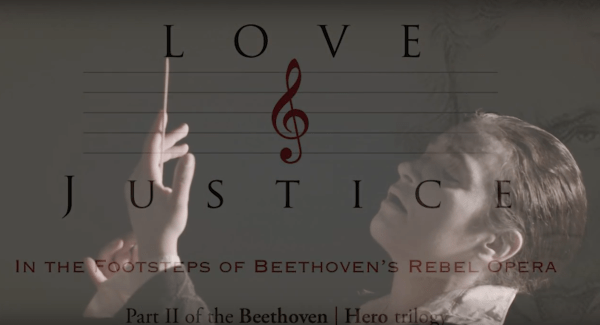
I’d like to introduce you to an exciting film project I have been working on as a writer and story producer …
Love & Justice: In the Footsteps of Beethoven’s Rebel Opera is a documentary film about the power of hope even when there is no cause for optimism. It interweaves four unforgettable tales: (1) The story behind Beethoven’s only opera, Fidelio, which tells of a woman who must disguise herself as a young man to rescue her husband, who has been unjustly imprisoned by a tyrant; (2) the story of Beethoven’s own physical and spiritual struggle to create the opera in the face of his impending total deafness; (3) the story of the brilliant Chilean composer Jorge Peña Hen, who was imprisoned by Pinochet and wrote his final work from his cell, using only doused matchsticks and scraps of paper; and (4) the contemporary tale of Hen’s granddaughter, the dancer Maria Belen Espinosa Peña, who, like Fidelio, dresses like a man—in this case, her grandfather—in an extraordinary performance designed to rescue his legacy from the confines of forgetfulness.
During the Chilean dictatorship, the loved ones of the Disappeared would take to the streets with signs depicting their lost family members and the words “Se me olvidaste?”—have you forgotten me? With Love & Justice, our filmmaking team, led by Director Kerry Candaele, is paying tribute to those rare souls—the Beethovens and Fidelios and Maria Belens—who, with bravery, grace and the power of art, dare to say that, no, we will never forget.
Love & Justice is the second part of Kerry’s trilogy, Beethoven | Hero. The first part, Following the Ninth: In the Footsteps of Beethoven’s Final Symphony, has screened in more than 250 cities around the world, from Berlin to Manhattan to Beverly Hills, introducing audiences to the enduring global impact of Beethoven’s Ninth Symphony. We are now halfway finished with Love & Justice and have created a Kickstarter fundraising campaign to help us complete the film. Please visit the site, take a look at our essays, trailers, reviews and rewards, and consider making a contribution at any level—the opportunities start at just a dollar. Many thanks for your support! We are eager to complete this exciting project and bring it to your city.
– Greg Blake Miller
Tucker on the Mountain (TGWP 2)
From the novel This Game We Play, by Greg Blake Miller
Part I, “A New Job” (Continued from TGWP 1: “The Oldest Rock in Mud Pony Lake”.)
1. The Mountain
I was sitting on a cliff when the phone rang.
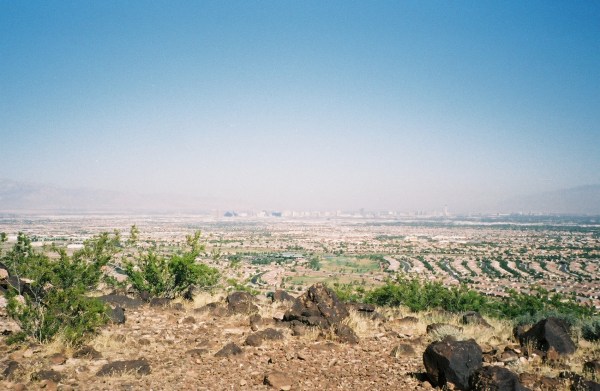
Beneath me, the valley sprawled in muddy brown and terra cotta red and a hundred pebbly shades of tan. The heart of the city was dark with mulberry trees. I’d spent my childhood beneath the branches when they were young and marked the edge of town, before the stucco tracts had spread like some inflammation of the skin. Ten years now I’d been away, grimly tinkering with the idea of growing up, and the valley floor had redrawn itself in my absence. Now, from the mountainside, I couldn’t pick out my boyhood home, my boyhood neighborhood, my nearest boyhood major cross streets. It was as if the city had swallowed them.
My parents had escaped—one is tempted to say just in time, but just in time for what I’m not sure—and now were living in a too-clean house on the town’s new edge. Ten minutes of indifferently paved highway to their east was the little stucco one-story to which I’d just moved with my wife and my baby boy. Everything had changed in the valley of my youth, but my folks were still just down the corridor. All I had to do was holler.
From my perch on the west face of Mud Pony Mountain, I could see their house, and mine too. There were no mulberries to hide the rooftops. We’d all moved someplace visible, a bulging belt of Zantrum Valley floor speckled pea-green with staked saplings in pink-rock yards. Beyond the belt, old ranches huddled here and there beneath cottonwood clusters, awaiting the final offer, the earthmover, the axe. A hundred thousand acres of beige crust and scrubrush and basalt boulders waited, too. The brown mountains waited. The lizards waited.
On my cellphone—the voice of my old friend Blum.
“How’s your mood?” asked Blum.
I could hear the sneakers squeaking behind him.
“Did you know,” I said, “That the bottom layer of schist on Mud Pony Mountain is 1.7 billion years old–”
“Tucker–”
“And that directly atop that sits a layer of limestone which is only 700 million years old?”
Blum sighed.
“Is that so?” he said.
“That is so.”
“Thank you for sharing that. Now–”
“Do you realize, Blum, that that makes for a one billion-year gap in the record?”
“Fascinating. Tucker, why–”
“They call it the Great Unconformity.”
“Are we speaking metaphorically?”
“No, geologically.”
“Where are you, Tucker?”
Blum could be a bit thick at times.
“I’m about a quarter of the way up Mud Pony Mountain,” I said. “They’ve got an informational plaque here. Pretty clear day. The city just sparkles.”
“Can you see the campus?”
“Hang on.” I put on my sunglasses. New prescription. “Yep. Sun’s glinting off the copper on Bumbry Tower.”
“Can you go to your car, sit down, and drive to Bumbry Tower?”
“Why? What’s happening at Bumbry Tower?”
“You know, Tucker,” Blum said, “you’ve turned out a real ass.” Then he hung up.
I put the phone down on a big rock and tried to think about the schist some more, but it was no use. I kept hearing Blum tell me I’d turned out an ass. You had to hand it to the guy. He knew me about as well as anybody.
The problem, and the reason I was an ass, was this: Blum was no longer just my old friend, but, as of that fall, my colleague. And not just my colleague, but my superior. Blum was the oldest and most-trusted assistant coach of the University of Zantrum Dust Flames basketball team. I was the youngest and least-trusted. Halfway across the wide brown valley, there was a gym in the shadow of Bumbry Tower, and my old friend Blum had every right to expect me to be there. At that moment, 12 tall young men in long shorts were sitting on a hardwood floor hugging their knees, rocking gently to 12 imaginary grooves, listening to a man much older than Blum tell them that March triumphs are born in October workouts.
“The question is,” he was saying, “are you satisfied with your October workouts?”
The old man would smile and turn and leave the gym, calf muscles churning like pistons. The tall young men would feel a little guilty. My friend Blum would look at them and shake his head and say, “He’s hurting, my friends. Make no mistake.”
Then, a deep, deep breath, let out very, very slowly.
“Understand, fellas, this could be his last year.”
It was October 14, 1999, and a new season was about to begin.
That year, as every year for the preceding half decade, the assistants were wondering whether the old man might announce his retirement, or perhaps die. There was nothing wishful to this thinking, I think. It’s fair to say most people adored the old man. Adoration, however, did not preclude a strong interest in the line of succession. Blum’s chief concern was not that the program fall into his hands, but that it not fall into the wrong hands.
My friend Blum was 40 years old. He had lived his entire adult life in the Zantrum basketball program. He’d never married; he had no siblings. His mother had died when he was 15, struck by a linen truck on a skinny Bronx sidestreet. His father had died more conventionally, of heart disease, when Blum was 21. Zantrum basketball was the only family Blum had. He’d been a bruising reserve forward (as the Zantrum fans recall) or a thug (as his opponents recall) on our 1977 and ’78 national championship teams. Now he was a towering, pudgy, bearded sentimentalist, the “hugger” every staff needs. He’d been the old man’s assistant for 18 years, and in those years he’d celebrated two more national championships. He’d eaten about a thousand meals at my family’s house. Blum was like a big brother to me, though I had one of my own. Apparently, I just couldn’t get enough of that sort of thing. I’d met Blum just before that ‘76-‘77 season, when I was six years old. I’d latched onto him and never really let go. I knew him well enough to know what he was up to down there in the gym that day while I was sitting on Mud Pony Mountain. He was telling the players how badly their lack of effort was wounding the old man. He was telling them the old man deserved better.
The old man, I ought to tell you, was my father.
When they weren’t calling my father the old man, they called him Coach Ax. Al Axelrod had been coaching the Dust Flames for 29 years. He was, by most everyone’s estimation, or mine at least, one of the best coaches that ever lived.
Continue reading: TGWP Section 3: “The Old Man and the Gym.”
The Oldest Rock in Mud Pony Lake (TGWP 1)
From the novel This Game We Play, by Greg Blake Miller
Prologue
It was bad enough that my father was older than me. When I found out my older brother was older than me too, I knew I had a thing to contend with. When Simon was 11, and I was just six, he took to playing afterschool basketball with a pair of big boys down the street, and I was not invited. It was winter; my father was on the road and my mother was tired. I think she and I shared a sense of being left out. In any case, we spent those afternoons together in a drowse of suspended anxiety. She’d lie down and let go the tension of being as good in our small world as Dad was in the big one, and I’d lie down with her, my head on her belly, and listen: Bubble, gurgle, plink. I thought it was the sound of calm, and whenever I heard it the prospect of my never making it down the street to play ball with the big boys seemed a whole lot less troubling.
The sound, though, was not as portable as one might hope, and I spent most of that winter wondering at my smallness and edgy with the desire to amount to something special. I monitored the world for ballplayers with my name and stories where the younger son made good. I did a semblance of pushups on my bedroom floor. I developed a taste for genie myths and swords in stones and the idea that there were very, very old things that, when stumbled upon by the pure of heart, would share the secrets of the ages. By springtime my father was around more and I thought about these things less. But I still thought about them. I was thinking about them, in fact, that first hot Saturday as we rumbled to the lake in Dad’s cozy old shoe of a tan Ford sedan.
The down-the-street neighbors were waiting when we got there. Those two big boys came rushing at Simon waving some magazine like a captured flag. “Check it out! Check it out!” Their big father snatched it from them, though, and grinned at my parents through a mask of sunscreen. He shrugged. He waved a meaty paw. He slapped my father on the back. My mother, he hugged. The two boys put each other in headlocks and punched each other in the arms and set to emptying our car. They pulled the cooler from the trunk, and the bucket-and-shovel from the back seat, and the Nerf football, and the flying disc, and the small plush giraffe I’d brought in the car but hadn’t intended anyone to see…
+++
If you turned away from the two cars in the little dirt lot and looked into the baking distance, everything seemed wild and untouched. Mud Pony Lake was a good 20 minutes of raw southwestern desert from anyone’s house; it sat sheltered from the city on the far side of jagged-backed Mud Pony Mountain, the tallest and barest peak in Zantrum Valley. I’d heard somewhere that the mountain was almost as old as Earth itself, and that it used to be twice as tall before a quake shook the top half into the lake. This, of course, intrigued me, and I left the big boys playing Frisbee and the grownups talking business and went searching for a rock from the beginning of time.
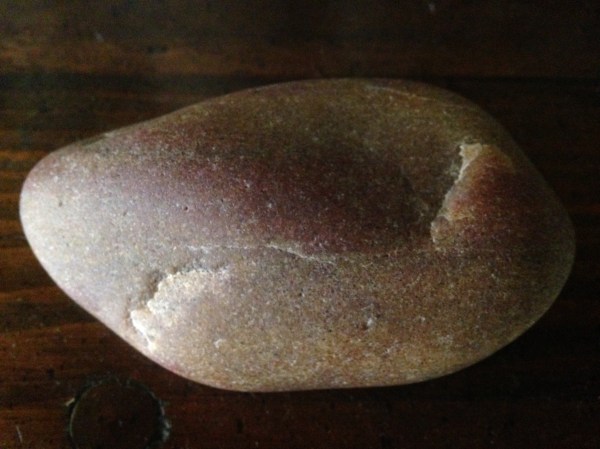
Mostly I saw ovals; they were pink and gray and neat and smooth and they all looked a little too new. I picked one up, admired it, put it back with whispered respects, ambled on in shallow clear water, eyed the stones each sloshing step, let the lake keep them, looked for the one that measured years not in millions but billions. Then I saw it, brick-like and fist-sized beneath a half-foot of water, and I took it and I turned it over in my hand and I knew I’d found the rock from the very start. Nothing so pretty, but it had a slick plane that broke off at a wounded spot and showed the time-striped insides, and I told myself, This is the one that’s weathered all the adventures. The rock was cool and wet on my fingers. I stood there moving my thumb across the jagged edge and feeling big and small at the same time.
One of Simon’s friends tromped toward me in the sand, dragging his big bare feet and spraying grains up in the air and into my eyes. He asked me to see my rock and gave it a good once-over and told me, It’s good for skipping, and I, not sure what he meant, said, It is?
“It sure is,” he said, and he side-armed it out into the still blue water. I watched it bounce at 20 feet, 40 feet, 60 feet, gone.
“Isn’t that cool?” he said, and I understood he’d meant no harm, but I felt harmed. I nodded and walked away.
Simon came up to me, sun-browned and snake-slim, quick on his feet, no sandsplatter, just the quiet approach of authority, big hard brown eyes full of reason and justice and the will to make things right. A sense of responsibility. Simon could be relied on to put straight the things others let slide. He’d taken one look at me from across 10 yards of sand and coolers and he knew he was needed.
“What’s wrong?”
“Nothing,” I shrugged.
“Don’t gimmee that. What’s wrong?”
“He threw my rock.”
“Where?”
“Out there.”
“What did it look like?”
I told him.
“I’ll get it,” he said, and walked off into the water like a god with gills.
My father had overheard us.
“Don’t go that far, Simon!”
Simon kept going.
“Come on back, big fella!”
Dad had a sandpaper throat and a warm, smoky tone, though he’d never smoked. I loved that voice; I gave myself sore throats trying to make it come out of my mouth.
“It’s too far out, Simon!” my father shouted. “We’ll find another rock!”
But Simon was gone, under the blue, way under the blue, holding his breath or breathing the water or whatever the heroes do.
“Simon!!!”
Simon wasn’t listening.
Dad tousled my shaggy yellow head. Sand fell into my eyes.
“Simon’ll get you that rock,” he said. “Don’t you worry.”
“It could have lived at our house,” I said.
My father took a deep breath and let it go and squinted out at the lake. “It may yet,” he said.
Now my mother was shouting:
“For God’s sake, Al, go get him!”
“He’s fine!” my father said. He was suddenly cleansed of his own concern, or pretending it well. My father was most always a cool customer, but never more so than when my mother was worried.
“He’s too far!” Mom said.
“He’s getting Tucker’s rock.”
“Why doesn’t Tucker get another rock?”
“That’s the one I picked,” I said.
My father looked at my mother and shrugged. “That’s the one he picked,” he said.
I looked at my mother and shrugged just as Dad had, and my mother smiled at me and put her hand up over her brow and looked out at the water. She was calmer now. I think she wanted very much for Simon to find my rock.
“Simon!!!” Dad shouted.
+++
A slick brown head, eighty feet out. A sunbrowned arm punches out of the water in triumph, something shiny clutched in strong fingers. Simon rises on the water, his bony back glints in the sun, and he’s under again, on his way to me…
The rock is not mine. It’s the most beautiful rock I’ve ever seen. It’s blue and green and yellow and red. It’s oval as an egg and smooth as glass. But it’s not mine.
Twenty-five years later I keep the rock on my hutch right next to the other good stuff—a picture of Priscilla from the month we met, an old bit of basketball net, a six-month portrait of my little blond boy. I treasure this rock but long for my rock, the rock I found, the one I picked, the one from the beginning of time. I wish I’d taken it upon myself to disappear into that water and find what was mine. I don’t even remember what color it was. I’m not sure if I’m imagining here a completely different shape when I try to describe my rock. I don’t remember much about it at all. Only that it was mine, and then it was gone…
+++
Mud Pony Mountain went pink and then purple in the afternoon light. I did not let go of Simon’s rock all afternoon. Those big boys didn’t bother me anymore. We piled in the car and headed home, grimy and exhausted as the city lights rose up to meet us. Simon looked proudly at the rock in my hand.
“It’s even better, isn’t it?” he said.
I shrugged and smiled and looked him in the eye and thanked him.
The Once & Future Rebels
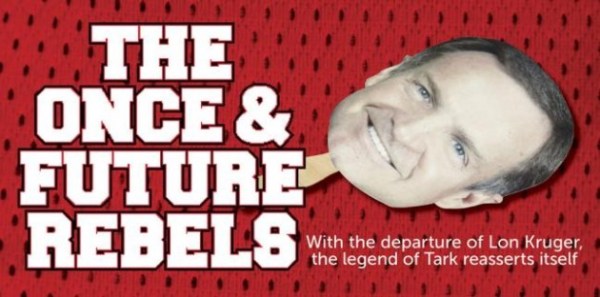
As the UNLV men’s basketball program heads into another coaching search, it will be fascinating to see the way interest groups form around different candidates—and the way history and legend are leveraged by those groups. It may sound as if I’m talking politics, but, well, I am. Culture matters, and in Las Vegas, culture and UNLV basketball are intimately intertwined. Here’s a link to the feature, “The Once & Future Rebels,” that I wrote the last time our city came to this juncture …
Closed City
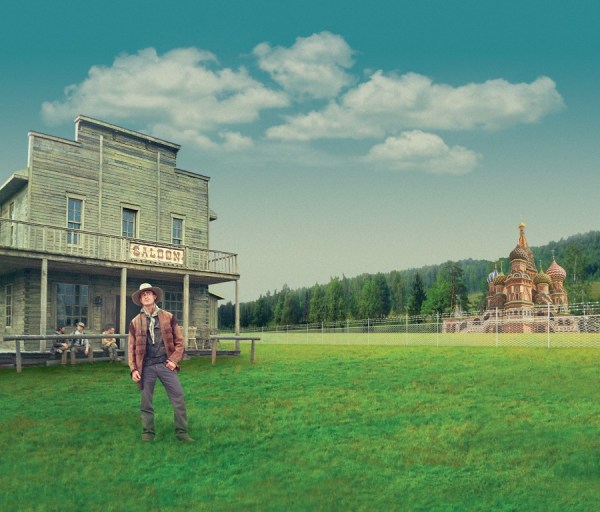
Adventures in the Muscovite film trade, 1993 …
“The set was on a military base; a legendary Russian designer had built a replica Western town where even the Man With No Name would have felt comfy enough to chew his cigarette and shed some blood. I spent hours teaching a wonderful Russian actor named Boris to walk into a bar, fix his eyes on the villain and declare, “You’re the only man I ever met who sunk to the bottom and then went lower.” The lines would be dubbed, but I had to get his mouth working the right way. Besides, I was from Nevada, and I assumed I could get him to talk like a cowboy.”
Read more in my story, “Closed City,” in Vegas Seven.
 Reentry Shock