A Mind in the Wake of the Storm: “My Intention” in Red Canary Magazine
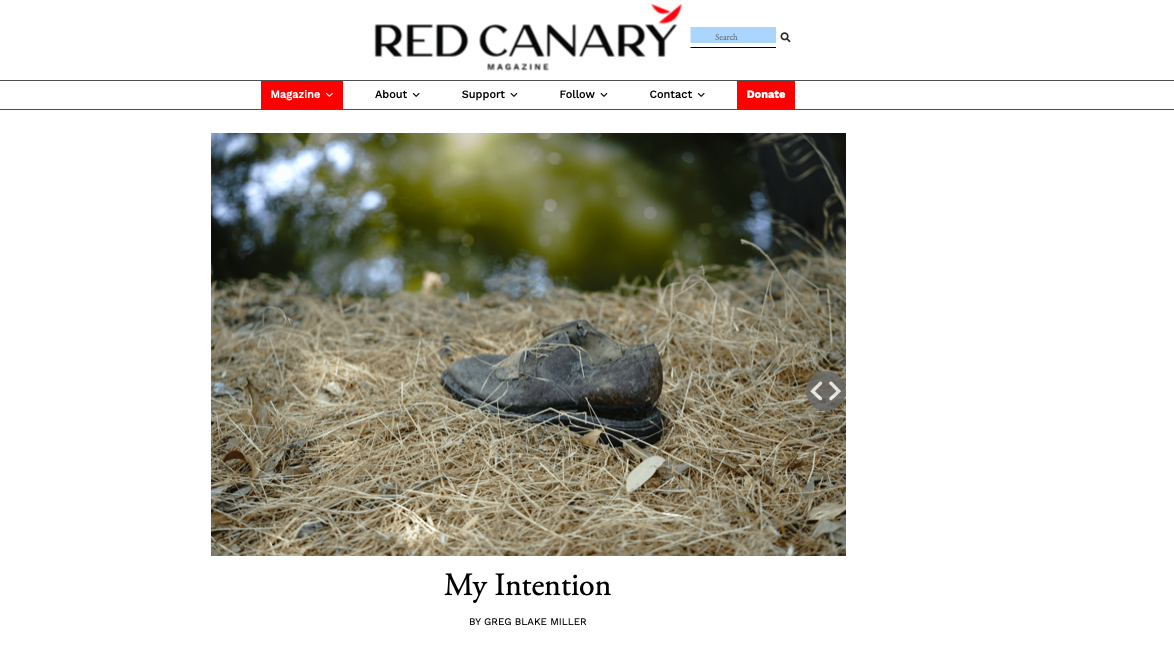
(Click here to read the original essay in Red Canary Magazine.)
On the morning after the election a nation woke bleary eyed and beheld what it had wrought. Some despaired, some delighted, some turned over and went back to sleep, assuming they would wake to a different, less ridiculous truth. I typed. There was nothing normal about what wound up on the screen. “Why all the fire imagery?” my friends asked. I told them it was a Rorschach of my brain, which was apparently burning. But I think the better answer is that fire is a process, at the end of which which something qualitatively different remains. In the end, this is a prose-poem about not-knowing. And trying, just for a moment, to be OK with that. Here is the essay, or whatever it is, published in the wonderful Red Canary Magazine.
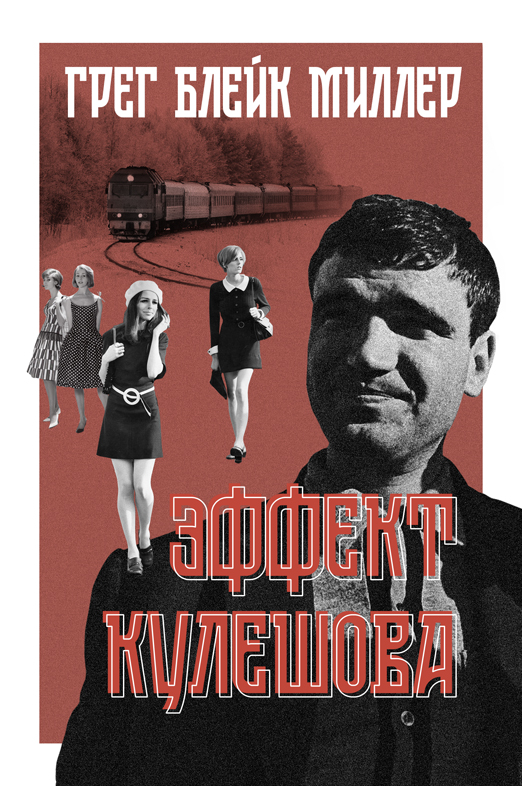
On November 1, 1974, the mercurial Soviet screenwriter Gennady Shpalikov is found hanging by his scarf in a Moscow apartment. Two decades later, American orphan Tom Benjamin sees the long-banned original cut of Shpalikov’s greatest film, The Ilich Gate,and declares “I know these people.”
At age 20, tormented by impossible recollections of Shpalikov’s death, Tom goes to Russia for answers. Lost on a milky night in 1995 Petersburg, he meets film student Kira Morozova. She, too, is haunted by inexplicable memories: a tsarist massacre, a husband lost to Stalin’s Gulag … and her own death.
But right now, she has work to do. On the set of The Ilich Gate. In 1961.
And she takes Tom with her. In the movies, anything is possible . . .
The Russian translation of my new novel, THE KULESHOV EFFECT — “Эффект Кулешова” — has been published by the dissident exile press Freedom Letters, publishers of works by Alexei Navalny, Ilya Yashin—who was released in the recent prisoner exchange—and the renowned Russian exile novelist and poet Dmitry Bykov.
“This is probably the best American novel about Russia in the past 50 years, if not longer,” Bykov writes in his forward to “Эффект Кулешова”. “And precisely this book reminds us of the country where we all once lived, and which was worth loving.”
Bykov has called the novel, which spans the 20th century but is centered on the cultural Thaw of the late 1950s and early 1960s, “a brilliant farewell anthem for a dying Russian civilization.” The beautiful translation by Ekaterina Kevkhishvili perfectly captures the rhythms and moods of the original English. We decided to publish the novel first in Russian, at a time when an entire post-Soviet shadow culture—some of its members in diaspora, some in a sort of internal exile, many in stages of patient and unyielding resistance—has been created by authoritarianism and war. We are currently seeking the right publisher for the English version.
For readers of Russian, or even for English-speaking friends who would simply like to have a copy of the first published version of “The Kuleshov Effect”, here is the link at Freedom Letters. I should add that this publishing company is doing extraordinarily brave work. While my book is, at its foundation, a love story about a boy, a girl, and a remarkable moment in history, many of the works published by Freedom Letters are engaged in an epochal battle for freedom of speech, thought, and conscience, and to support Freedom Letters is to support this mission.
https://freedomletters.org/books/effekt-kuleshova
Many thanks!
– Greg
Ladybird Grove (Lana’s Song)

Recently published in Red Canary magazine, my story “Ladybird Grove” takes us deep into the forest, where human memory meets the rhizome …
I have no channel, no verifiable method, for communicating these words to you. The science of life has not yet decoded these wild spaces. I myself do not understand how I came to be here. This is a green and wordless place, shadowed and rainweary. When the sky yawns, light rushes in and drapes the canopy with diamonds and retreats as quickly as it came. So, I have peace and spectacle. Everything else, I am coming to understand, is far away and long ago. But even here the words remain within me, longing for you. All I can do is trust that they will leave my stillness and travel this loamy soil to find you, wherever you are. Read the full story in Red Canary magazine …
Double Duty: The Las Vegas Legacy of Herman Moody

Herman Moody, a pioneering officer who blazed a trail for African-Americans in the Las Vegas police force, died on February 25 at age 98. I had the privilege of spending time with him for this 2002 profile. I’ll never forget the richness of his storytelling, the strength of his values, and—on a personal note—the kindness and patience he showed as I sat literally on the edge of my seat, asking question after question, utterly absorbed in the story of his remarkable life. You can read the original story below.
The Joy of Magazine Cover Art
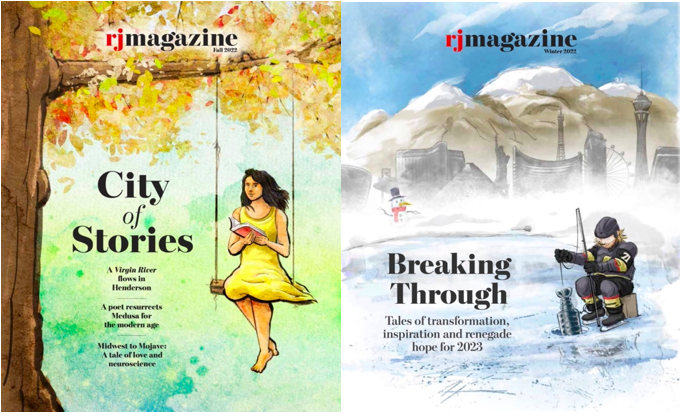
Since this past summer, I’ve been the editorial director of rjmagazine, the quarterly magazine of the Las Vegas Review-Journal. Very proud of the first two issues we’ve released, the most recent of which just came out for RJ subscribers last Sunday. One of the biggest joys has been creating our beautiful illustrated covers (above). Hats off to artist Wesley Rand, art director Mark Antonuccio, and super-secret-weapon artistic advisor Svetlana Miller!
– Greg Blake Miller
Mikhail Gorbachev, Avatar of Hope, 1931-2022

A great man has died, the soul of an era of hope rather than rage, learning rather than willful ignorance, and faith in our shared humanity rather than the pitiful, vengeful fetishes of nationalism. Mikhail Gorbachev was imperfect, like all of us, and time and oppression would ultimately mute his message, but few men have done more, in the face of almost insurmountable odds, to strip the world of its hardened layers of inhumanity. He is not to be faulted that, in his country and elsewhere, those layers have grown back, hard as an ox hoof. May his memory inspire us, once again, to regard this earth as a common human home, salvaged only by liberty, learning, truth, tolerance and cooperation. If that sounds corny, it should be cause for concern, because such concepts once changed the world.
– Greg Blake Miller
Mourning Flatcrown
Or, The Middle Desert
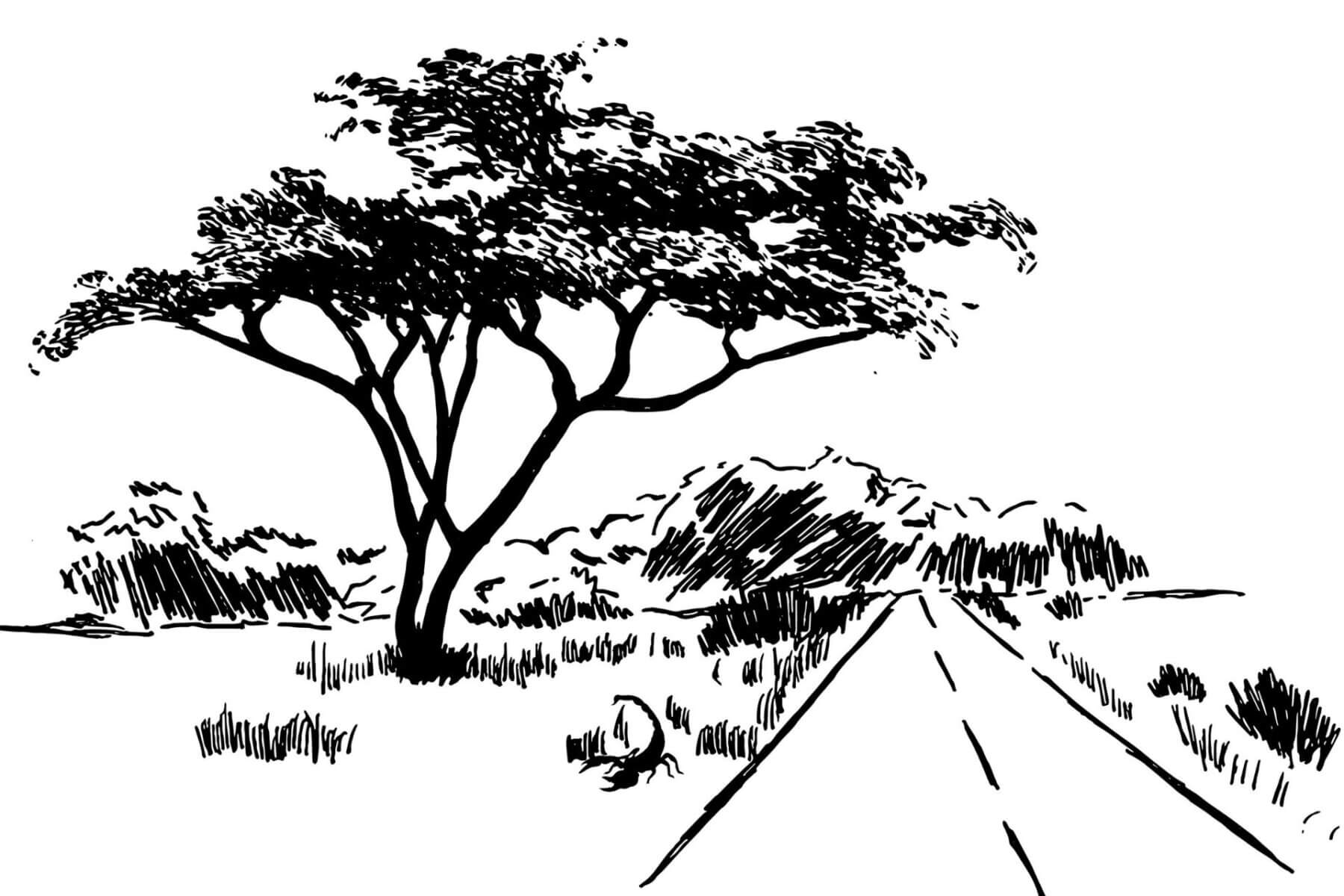
In this short-fiction piece recently published as part of Red Canary Magazine’s wonderful EcoLit series, we’ll travel deep into The Middle Desert to meet Irving and Polina, who have a tragic history, a seemingly God-forsaken patch of desert, and a miraculous secret that will complicate everything … Here’s the introduction — you can read, or listen to, the full story by visiting Red Canary.
In the days before the Middle Desert disappeared, I drove to Irving’s each morning well before six. In the winter, that meant smelling the fine cool emptiness of desert dark. In the summer, it meant catching the gold from the east just as the sun pulled itself over the ridge of Mud Pony Mountain. Each day I spent long hours and untold calories unloading ornamental shrubs and preening fan palms that had arrived by night on large trucks from the distant High Desert. I didn’t yet understand, botanically speaking, why they couldn’t just grow these things in the Middle Desert. Something about our shitty soil. Not enough shit in the soil, I guessed, caused by a general lack of life forms.
Our town, recently small and a little less recently nonexistent, was attracting waves of retirees, deposited in closely packed clusters at our port of dust as if by a desert cruise line. The newcomers did not distinguish the Middle Desert from other, less deserted deserts, and they enjoyed the conventional symbols of desert living more than the less glamorous natural fittings of our local real thing. Our real thing, Irving always told me, was the wonder of wonders. But it did not sell.
“I tried for years,” Irving told me. It was one of my first days on the job. Irving grabbed a fallen frond and flicked a scorpion from his boot. “I wanted to do right by this land, kid.”
“Haven’t you?”
Why the guilt? The man was running a nursery, not a copper mine. God, it was hot. My face was covered with grit and sweat and tiny splinters of unknown provenance. I knew the place was going bust. I knew the newcomers liked palms more than scrub. I knew that Irving had apparently set aside his principles to import the alien fan palms, and that I was here to unload them and prepare them for sale. At the time, it was all in a day’s work to me. But to Irving, we were complicit in a cover-up, a fake, a forgery of reality: the illusion that our desert was the kind of desert envisioned by people who had never before lived in the desert.
One of the new symbols of our community, thanks to us, was the cactus, which did not grow in our Middle Desert, only in the neighboring Low Desert; another was the Joshua tree, which grew only in the neighboring High Desert. Without Irving’s imports, what we would have had, most of all, was a sort of pale-green tangled brush that grew from the shady side of basalt boulders on our three acres. I thought it was sagebrush, but Irving told me it was something else.
“What is it?” I asked Irving.
“It is the tree of life,” he said.
“It’s not much of a tree,” I said.
“It’s not much of a life.”
Irving’s smile was the kind that made a young man want to hug an old man and soak up the bittersweet wisdom of all those wasted years. His skin was browned from half a lifetime of hiking deserts, high and middle and low. When he smiled, the creases spread like sunrays from the corners of his eyes. He vowed never again to develop his three acres beyond the nursery sales hut and the 900-square-foot home he’d built from rough gray cinderblock for himself and his wife, where they had lived and she had, briefly, died. …
Read — or listen to — the full story in Red Canary Magazine.
Our Grand Adventure

For NPR’s Desert Companion Magazine, I went back to the hometown memory well for an impressionist piece on our long-lost Vegas theme park, MGM Grand Adventures—a place at once sort-of famous, oddly lamented, generally forgotten, and weirdly compelling:
https://knpr.org/desert-companion/2022-03/our-grand-adventure
The Tragedy of Closed Media and Closed Minds
Thoughts from the first three days of a brutal Russian March
Facebook, March 3, 2022
I was fortunate to work for a Moscow newspaper during the challenging but inspiringly open media atmosphere of the 1990s. It felt like the beginning of something beautiful, but in some ways it was perhaps already ending—a long twilight journey back to censorship and disinformation that culminated today with the liquidation of Echo of Moscow Radio.
Independent journalists are fleeing Russia, and the state Duma has passed legislation that would sentence any journalist providing war information that does not parrot the Putin line to 15 years in prison. And yes, the Putinist vision of “fake news” would include having the gall to call this war a “war.”
But a war is what it is—a hot war and an information war—and I trust the bravest among Russian journalists will find ways, creative and resourceful, to share truth with Russians of conscience who hunger for it, and for the transformation that only truth can bring.
Facebook, March 2, 2022
As Putin’s bombs set schools and apartment buildings ablaze across Ukraine, his censors are silencing Russian media outlets for daring to use the word “war” to describe his war.

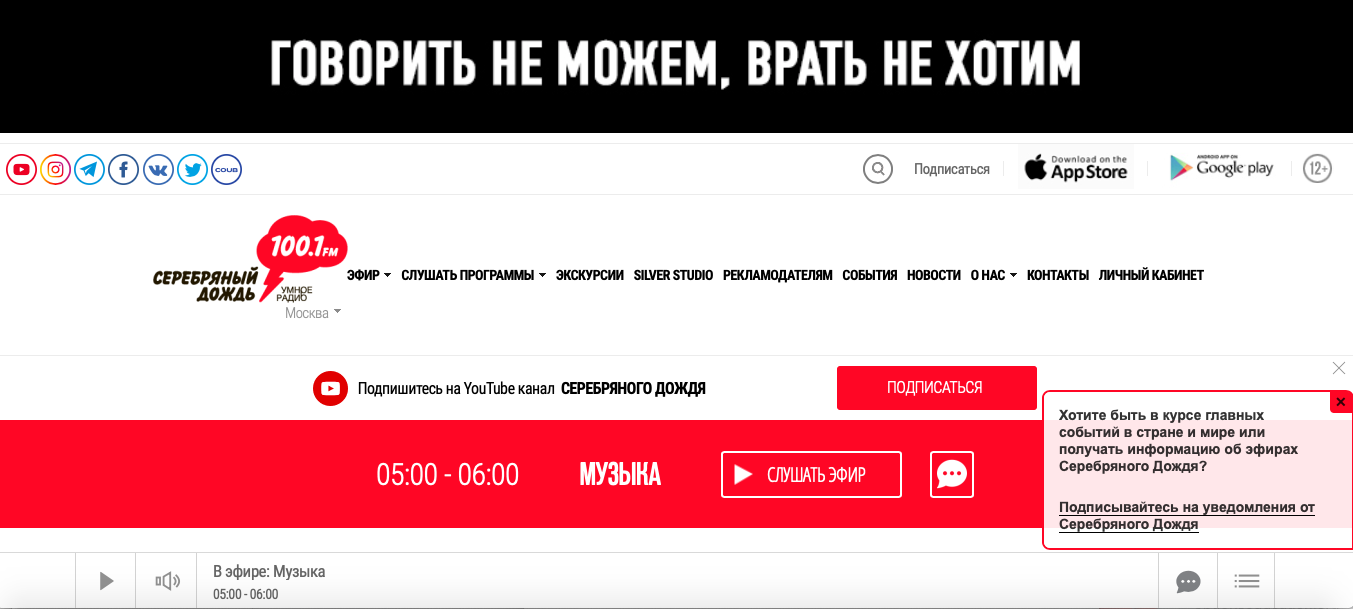
Echo of Moscow radio continues to speak out on YouTube, running the banner “We’re Still Working.” Silver Rain radio, home to detailed news and analysis in recent days, has tried to speak around the censors as best it can, using the “Aesopian language” of Soviet times to say what cannot be said. But they realize their avenues to truth are narrowing quickly and have turned to music programming on their streaming site beneath a banner reading “We cannot speak. We don’t want to lie.”
The chorus of an old Soviet song said, “We were born to make the fairy tale [skazka] come true.” Today, a dark parody is going around: “We were born to make Kafka come true.” Indeed, the Penal Colony grows with each passing day, but the bravest among the media and everyday citizens are still seeking paths to truth across Putin’s river of lies.
“We can’t call certain things by their names,” one radio host said yesterday. “But you’ll know what we’re talking about.”
God willing, such people will be heard.
Facebook, March 1, 2022
If we are supporters of open and nuanced discourse abroad, we must also avoid jingoism and intellectual narrowing at home. That means maintaining a clear-eyed view of history and our place in it. To avoid discussing the complexities behind the long, sad decay of relations between Russia and the West makes no more sense than whitewashing the stupidities of Versailles from history. Neither discussion explains or excuses the brutal ideologies and evil deeds of dictators. But critical history does and should seek to understand whether there was a moment when the politics and policies of the democratic West could have tilted history toward a better outcome—one where the dictatorial seed never manages to take root.
So the fact that the following words, written in 1997 by the preeminent American diplomat and Russia specialist of the 20th century, will be unpopular today does not make them any less prophetic:
“Expanding NATO would be the most fateful error of American policy in the entire post-cold-war era. Such a decision may be expected to inflame the nationalistic, anti-Western and militaristic tendencies in Russian opinion; to have an adverse effect on the development of Russian democracy; to restore the atmosphere of the cold war to East-West relations, and to impel Russian foreign policy in directions decidedly not to our liking.”
– George F. Kennan, “A Fateful Error,” February 5, 1997.
One of the responsibilities of thinking people in a democracy is to be aware of our historical missteps and to learn from them. To repeat: That does not remove blame and enduring shame from the shoulders and fevered mind of Vladimir Putin, who is in the process of destroying not one but two countries, one of which happens to be his own. But life in a democracy dictates that as a people we Americans are capable of self-awareness, self-improvement, and the nuanced thinking that leads to better policy in the future.
I’ll finish with something like a prayer, in these hard days where hope seems so distant: May peace and liberty come to Ukraine, and may a free and democratic future come to Russia. #НетВойне
– Greg Blake Miller

The Provincial
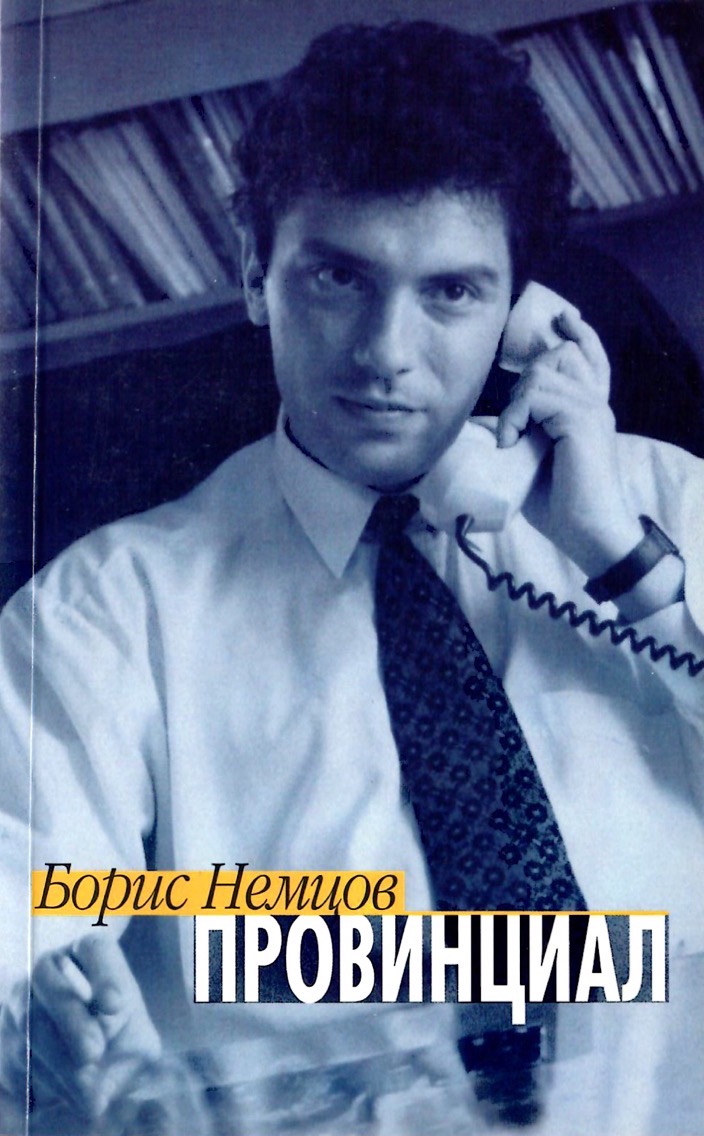
Seven years ago today, Boris Nemtsov—one of the most capable, promising, and admired figures of Russia’s struggle for democracy—was murdered on a Moscow bridge. His voice, however, still echoes today: “If power blocks open discussion of the things it is doing, if power is against elections, if power forbids access to information, then it creates the preconditions for corruption and total lawlessness.” (Boris Nemtsov, “The Provincial,” 1997) #нетвойне
 Reentry Shock