From the Archives: Revolution Square
It’s 1996, I’m writing for The Moscow Times and wandering the parks and alleys of the capital, gathering it in, allowing it to become a part of me, each day finding new mysteries in its cool air and cold lovely stone. It’s my third tour working in this country; I’m no longer entirely a stranger here. But Russia, weird and wondrous, can’t help but leave even the most experienced foreigner feeling just a little bit strange. Here’s one of my adventures—and maybe not my proudest moment—described in a 2012 essay for Vegas Seven, “Revolution Square”.
From the Archives: The Morality of Slow

In 2011, I was editing the weekly city magazine Vegas Seven and recalibrating my sense of place in the hometown to which I had only recently returned. The city was at once deeply damaged by the Great Recession and, as always, energized and ready for change—constantly reshaping itself beneath our feet while we hurried from one moment to the next trying to keep up with it. Meanwhile, our digital existence seemed to echo our civic life, skittering about in our mental space, ever-shape-shifting, keeping us continuously looking down to make sure we understood where we were, seducing us into forgetting where we had been, telling us not to slow down, not ever, lest we fall behind. Amid this instability of both physical and virtual space, I reached a point where I sat down at (where else?) the keyboard and typed a thousand words that, I suppose, amounted to one: “Enough.”
Here’s the result—“The Morality of Slow.”
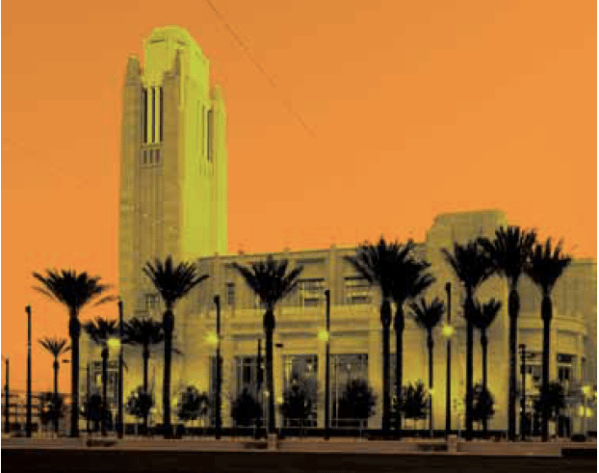
Seven years ago, with Las Vegas still digging out of The Great Recession, a national commentator argued that The Smith Center was the tomb, rather than the launching pad, for the city’s civic energies. I disagreed, a lot. This was my reply in the late, great Vegas Seven. How does it hold up?
Miller-March 29, 2012-Is The Smith Center the Last Good Thing?
The Set in the Woods
I stand on the edge of an artful world,
Where the red of the fire
Is dimmed by smoke.
Don’t be alarmed:
Everything is under control.
Only the eyes
Flash like traffic lights
Beneath the pale sunset moon
Of a temporary town
In a dried-grass clearing.
We have work to do:
“Quiet on the set!” they cry,
Out of pure habit—
Nobody is saying anything anyway;
Only nature speaks its night language.
They seem dissatisfied with the semi-silence,
But uninterested in its source.
Who wants to concede that the world goes on without us?
Even the wild dogs
And the dying leaves
And the face of a child in the forest
Go unnoticed, unheard, unseen, except by me,
Here on the edge, lost on the job
In the temporal space between last and next
And not-quite-now.
It’s never quite now with me.
I am not exceptional,
But somehow I am an exception,
Dazed by incomprehensible pauses in the action,
By my own elusiveness when community beckons.
I never knew life had such breaks.
I thought the story told itself, beginning to end,
In such a way that made it difficult for the characters to simply run off.
I wander into the woods, no purpose, no plan.
Like a hero from Cooper,
The child steps on a twig beneath dry leaves.
The twig—such lonely applause!—cracks;
From behind the cover
Of a lightning-struck stump,
A dog turns with a start,
A muffled growl, and then
A bark.
The child jumps,
The shimmer of surprise upon him like a feather on the soul.
Where had that dog been hiding?
And how did he get lost out here
Among the cedars?
The boy drops to his knees
And against my unspoken recommendation
Pets the lost mutt.
From the edge of the clearing
I smile to myself.
The kid is safe, I assume,
A local boy. I turn around
To those traffic-light eyes
Which now flash in the dark
As the director’s commands
Drown out the dog’s bark.
– Greg Blake Miller
Outside Golitsyno, Russia, 1993
How Much Caring Goes Into Your Sharing?
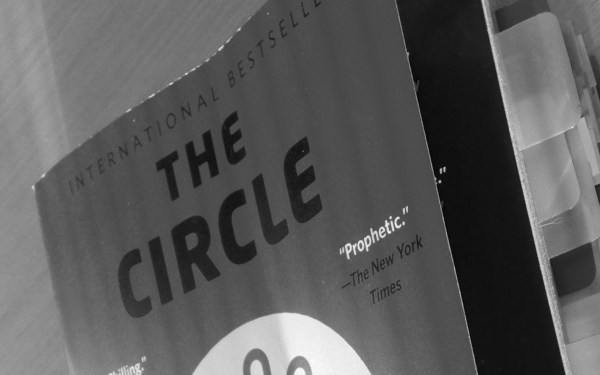
When we wander into Dave Eggers’ 2013 novel The Circle, the first thing we must do, akin to adjusting a watch when landing on faraway soil, is reexamine the notion of “Sharing Is Caring.” Eggers paints a portrait of a massive social-media corporation—The Circle—that gradually but relentlessly redesigns society, extending its circumference from its sylvan California headquarters outward to the city, the nation, the world. The engine of this radical growth is the corporation’s capacity to make the absurd seem inevitable. In smooth rhetorical steps, it reframes service to the company as service to society, privacy as theft, and erasure of self as selflessness, trusting that nobody will wade into philosophical waters to ask whether one can be selfless if there is no private self from which to give. The Circle’s guiding principle is “All That Happens Must Be Known,” but those grand words are dependent on the more innocent slogan, “Sharing Is Caring.” Those words provide the pseudo-ethical foundation for every step the company takes, for the most outlandish actions of its leaders, for Eamon Bailey’s overweening dreams and Tom Stenton’s cynical schemes. They also offer a window into the way we live today.
At first the phrase seems innocuous, or even, in a bumper-sticker sort of way, wise and loving. But upon closer examination, within the specific context of The Circle or, more importantly, the broader context of life in the age of social media, it develops shadows, first around its edges and then at its very heart. In these contexts, “sharing” does not mean what it seems: It does not connote the voluntary handing over of some portion of one’s worldly goods and privileges to another who is in need. For the most part, it also does not signify the voluntary, mindful sharing of one’s time and effort to help or console a person, animal, or community in need. Rather, the ancient ethic of opening one’s door to the stranger is invoked here only in the most cynical of ways: In The Circle, the knock on the door comes from the new governing authority—The Circle itself—the opening of the door is far from voluntary, and the one who knocks seeks not your aid and hospitality but your will and identity. In the broader social-media context of our lives outside Eggers’ book, there is a less direct sense of an authority barging in with its bogus warrant, but in its place there is often a more insidious type of authority at work: A bland but almost binding cultural rule of the road that we must leave our doors open and consent to being raided, observed and robbed. Our time, attention, data, creativity, and sense of self are suddenly available for the taking, like so many old possessions scattered on the lawn for a garage sale.
What does “Sharing Is Caring” mean when the sharing becomes obligatory (you have no choice but to share), ceaseless (you cannot stop sharing), unvaried (you cannot decide what to share and what not to share), and ubiquitous (everyone shares everything all the time, so that any effort to opt out is socially deviant)? In our world outside The Circle, of course, this sort of sharing is less obligatory, and we have more choices about when, how and what we share. But do we tend to allow the “Sharing Is Caring” ethic to become a sort of de facto rule in our online lives? Does yielding our time, attention and data become a custom so ingrained in our way of life that it is difficult to opt out, or even to consciously grasp what exactly we are yielding? Are we in the grips of McLuhan’s Narcissus Trance, so consumed by a communications medium that we no longer understand the way it controls the pace, scale and pattern of our lives? Have we become Dallas Smythe’s Audience Commodity, a resource ripe for harvest?
In ancient monastic traditions, the notion of voluntary self-emptying is a path to enlightenment. The ego yields and the individual dedicates self to something (God, spirit, community) larger. The bumper-sticker value of “Sharing Is Caring” is built upon its subtle association with this saintly ethic, half-remembered from old tales and dusty sermons. But The Circle uses the phrase as part of a cynical bait-and-switch. When “Sharing Is Caring” is based on obligation (in The Circle) or mindless surrender to cultural norms (under the de facto rules of our online lives), sharing cannot be caring. Caring implies that one has been careful—full of care—in ones choices, particularly in the willful decision to serve another. When sharing is obligatory or mindless, it derives not from caring but from obedience or reflex. It is demonstrably not caring. Sharing, in this case, is set above caring. It does not really matter whether you care or not.
There are times when the notion that “sharing is greater than caring” might be useful: Think of reasonable taxation that allows us to maintain a judicial system and build schools and foster public safety and protect the nation and stitch together a social safety net. There is no admonition in the Constitution that we must care—with all of the individual will and empathy the word implies—in order to give our government the necessary resources to “establish justice, insure domestic tranquility, provide for the common defense, promote the general welfare, and secure the blessings of liberty.” Paying for these things is the price of admission for Americans. We can shift the shape and scope of our public expenditures through political action, but short of revolution, civil disobedience and garden-variety tax avoidance, we cannot selectively opt-in or simply opt out. In the broad sense, when it comes to paying for the upkeep of the nation, it once again doesn’t matter whether you as an individual care or not. Your tax bill arrives all the same.
But we have traditionally drawn the line between such sectors of life where sharing is greater than caring and those where sharing is the outgrowth of caring. We cherish a private sphere, a zone of self-ownership. Traditionally, we share the details of our lives with those whom we care about and who care about us. We try to make conscious choices about how we spend our personal time and who we invite to share that time. We choose our causes. We devote ourselves with care. We express solidarity when we feel it. We guard our thoughts and experiences and convey them to others when and if we’re inclined to do so. When it comes to sharing the content of self, we like to believe that we pick our moments, control our message, and choose our audience. But do we? How much do we share by reflex? How much do we share out of a sort of numb conformism? How much to we share without even knowing we’ve shared? How mindfully do we empty ourselves? Is our sharing unconscious? Or is it conscious but cynical, as we craft alternative selves, identities designed and constructed to suit the norms of our online community—the circle we live in, one that does not need Eamon Bailey to set the agenda because we ourselves help set it every day. Are we reshaped by the alternative selves we construct? Are the alternative selves, that is, constructing us? Are we sharing or being shared? Do we care?
– Greg Blake Miller
Mar Monte

The hole was dug,
Neat and square.
The boards were laid.
Hands worked here,
They placed these boards,
Bracketed the corners
To frame the pour.
The barrel of the truck spun through the dark of night.
The foundation was poured,
The sludge made solid.
The gray of concrete reassures.
You can trust gray.
Sludge filled the square.
This all happened long ago.
It dried smooth,
Ready to be
Dressed in hardwood. Danced upon.
A grandparent, a great grandparent.
Your people were married here, in this building.
The pour was hard and strong. No cracks but the vents placed for pressure.
Eighty years go by with a gasp and a cough and a sigh
And the birth of three generations.
You return here, where you have never been, but they have, and you are
The legacy of the pour.
The cracks have grown. The vent was not enough.
You look upon the crumbling verandah
And you know that you, that we, have a responsibility
Not only to live
But to mend.
But you have grown in a different age
And have not built those skills.
– Greg Blake Miller
June 19, 2017
Summer in El Segundo

Pale children in purple bathing suits,
Siblings, I’m sure,
Carve angry faces in the sand
And the elder spits slowly upon the younger’s creation.
Closer to the surf, Little Leo cuts his foot on a shattered seashell. The tide stings his wound. He does not cry out, only winces.
A bright jet roars over and nobody hears that Leo is not crying.
Sue pulls down her shades as the sun glints off the refinery walls.
A former footballer, I’ll call him Henry, is sucking in his disobedient belly, remembering the man he once was and imagining that he remains that man.
Is Sue watching Henry?
Henry would like to be seen.
Sue is not watching.
Nor is Big Beverly, who chars beneath a two-oh-six sun,
Dreaming,
One presumes,
Of igloos.
All this I pretend to know
On a lonely windless afternoon,
When I’ve forgotten to bring a book, and
God’s in his heaven, and
Everything is delightfully
Not right with the world.
– Greg Blake Miller, August 6, 1998
First Light (TGWP 7)
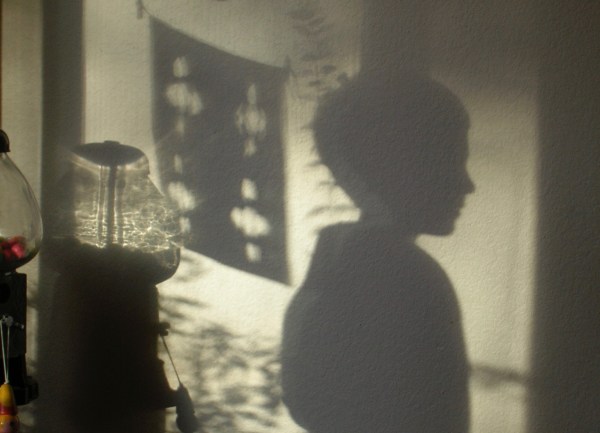
From the novel This Game We Play, by Greg Blake Miller, continued from “Madness” (TGWP 6). This is the beginning of the novel’s second section, “The Basketball Boy,” which returns to Tucker’s childhood. Photo by Svetlana Larionova Miller.
I am periodically and not unpleasantly haunted by a childhood image that I can neither place in time nor dismiss as a dream. In this vision, I am sitting atop Mud Pony Mountain, arm’s length from a cloud, a collection of just-gathered rocks spread before me on a rust and tan plaid blanket. An uneaten drumstick from a red-striped chicken bucket bastes in its own grease on a paper plate. My dog, a brindle boxer named Brassy, looks up at me as if to say I’m not gonna eat it either. A few feet away my mother and father and brother are eating and talking and laughing. The noontime sky hangs like a great cracked eggshell over the valley. The mountains look silvery and gaseous, as if one could walk through them to a different room beneath a different shell. I look straight up at the sun and then close my eyes to see how long its ghost lingers. I prop my feet on patient Brassy’s back. I sleep—or, rather, I brush the edge of sleep but stay awake, just enough awake and just enough asleep that the world appears to be a dream but is still the world. I have mentioned this vision to my mother, and she has assured me that we took neither Brassy the boxer nor a red-striped bucket of chicken to the top of Mud Pony Mountain, which, in any case, as far as she knows, is accessible only by helicopter.
This much is true: The oldest memories I have are of my keen pursuit of a waking dream-state, where there was only a slim and dimly understood barrier between physical sensation and magic. I was three years old and full of desire and I did what it took to feel what I wanted to feel. In the evenings, just before bedtime, my mother would put a wet load in the dryer and shut off the laundry room light and from across the house I could hear the room begin to hum. I’d finish brushing my teeth, stroll down the hallway in my pajamas, slip into the laundry room and lie down on the cool blue linoleum. The dryer had a single fluorescent tube up top and it bathed the room in a ghostly gray glow. The place was irresistible.
I was always on the ground somewhere, like a puppy, or an ant; my world was defined by the textures of floor coverings. In the kitchen we had lumpy tan tile that was always cold, and I liked to sprawl there in the path of the warm wind that blew from beneath the refrigerator. Carpets, too, I liked. The hallway semi-shag was thick and soft and the color of avocado, but if I brushed my hand across I could change the shade to something like lime. I could amuse myself for a good while with such tricks. If I followed the hallway far enough, I’d get to my parents’ room, then to their bed, where the brown bedskirt had a sharp edge that tickled my palm in a way I rather liked.
I don’t know how I got away with spending so much time lying around. My brother got used to stepping over me on his way from one room to the next. My mother would do entire loads of laundry in the dark while I lay at the foot of the dryer. Once she turned on the light, and I stood with a start like an awakened cat, and stretched, and left. I think it made her sad to see my peace disturbed so, and she didn’t turn the light on anymore after that.
By the time I turned six, my brother Simon had become a basketball star. When he wasn’t playing down the street or in a league, he’d go out to our backyard hoop and shoot 15-footers from around-the-world stations, testing the comfortable old two-handed from-the-chest set shot against a grown-up one-handed jumper. He set me up under the basket to rebound for him and tell him what I thought. He’d shoot a set shot from the left side and say “chest,” then a jumper from the same spot and say “overhead.” And I’d say either “overhead” or “chest” depending on which shot looked better to me. This was an issue of today’s comfort versus tomorrow’s hard-earned success. It was a foregone conclusion that overhead would win. Still, I was flattered to be consulted. And I understood what it was he wanted: I wasn’t to base my judgment on which shot went in, but on which motion looked better. When the overhead shot looked as fluid as the chest shot, Simon would know he was in business. My brother didn’t expect things to come naturally; he knew he had to make them become natural. As a fifth-grader he sat on the couch for hours each night with his feet on the coffee table and a full, forgotten glass of milk in his hand, memorizing Spanish verbs. Here, too, he included me. Peinarse-to comb one’s hair; peinarse–to comb one’s hair; peinarse–to comb one’s hair. To comb one’s hair? And here, of course, I was to say peinarse.
At the time, I hadn’t fully quit the sensual habits of my younger years—I suppose I maintained the lifestyle a little longer than most kids—but next to Simon’s laborious learning, all my lounging around seemed terribly unproductive. The feelings worth having were to be had through work. Soon enough, I decided to want the same things Simon did. I still wanted to feel the kind of feelings I felt at the feet of clothing dryers and refrigerators, but I stopped seeking the feelings out, stopped cruising the carpets and floors and appliance air vents. By the end of kindergarten I was sitting on the couch with my feet on the table and a glass of milk in my hand, spelling friend over and over with the help of my teacher’s mnemonic trick, “FRIday is the END of the week.” I also went out to the backyard and set myself up with perfect grown-up Simon form (overhead!) and pushed the ball at the basket, which was much, much too far away. As for the old desires, they sank into the creases of my life like pennies you lose in the car seat. Desire, which demands to be fulfilled, turned into longing, which is content to remain exactly what it is. Desire never forgets what it wants; longing, in time, becomes inchoate, a thing in itself, the reason for which can be utterly forgotten. It’s safer that way, anyway. You scare yourself less when you decide you’re unlikely to get what you’re hoping for, when you consign it to an impossible dreamland, a paradise lost, a childhood moment of green grass and shameless sunshine that flared and faded and you don’t know why. You can feel your longing, wonder what it’s all about, then shrug your shoulders and get on to the business of wanting the things that matter.
– Greg Blake Miller
Madness (TGWP 6)

This is the sixth installment the novel This Game We Play, by Greg Blake Miller, continued from “Coach Ax’s Preseason Party” (TGWP 5).
The explosions were just as I remembered them. Players’ eyes shone wide beneath falling sparks, just as they always had. The same milk-and-honey voice boomed over the loudspeaker. If you were a player or a coach or a fan or a little boy who, for this one night, got to sit on the ballplayer’s bench, this was the promised land. There were three firework bursts from the top of each basket and five from center court; columns of white flame rose to the rafters, broke apart just short of the jumbotron, fell in lazy firefly formations toward the blond heads of chanting cheerleaders and died in tiny puffs of smoke just before they could ignite innocent pigtails. Conical beams of light reached down from the arena rim, darting in wild arcs across the crowd, bathing revelers in circles of red and blue and green and ghost-white. As a little boy, I’d pointed up at green-tinted fans as the light circles swung across the stands. There’s the Martians … No, there’s the Martians! Dad would put his hand on my head and muss my yellow Prince Valiant hairdo and smile like a saint at the start of another pilgrimage. Tonight, I had the urge to reach up and dishevel my own moussed head. I had come to my first Midnight Madness when I was six years old and had not missed one until I’d taken my bags and books and jumpshot to the seaside town of San K, where madness came in time to mean a different thing altogether.
And Now…your ZANtrummmm DUSTflames!!!
The cheerleaders unrolled a red carpet with the “University of Zantrum” written along its length in golden lightningbolt script. The players galloped out of the tunnel and over the carpet to center court, upon which was painted the UZ logo, a swirling dustdevil with a flame shooting from the top. Senior point guard Elliott Murphy took a pass from the ballboy and the players began a layup drill in which there were no layups. Murphy, a 6’1” dynamo, made a 360-rotation-two-handed slam and the noise in the place was transformed from an agitated roar to a hysterical scream. Next, Baldwin Pimm, a rangy forward with a smooth jumpshot and a shaved head, took off from the corner of the key and soared in for a tomahawk jam. Eighteen-thousand nightowls, apparently quite successful professionals by day (non-student tix: $55), began slapping each other and howling like wolves and yelling “PIIIIIMeeeee” until their voices went hoarse. Behind the bench, a very old man had brought a great grandchild who appeared to be a few hours old and was holding him aloft like a Pagan battle torch. I was about ready to snatch the poor kid down when Great Grandma, with a great frown, planted some shame in the old coot. Three middle-aged men with John Kennedy haircuts tore off their shirts behind the media table to reveal the words “We Love Ax.” I smiled and closed my eyes and breathed deeply and opened them to wonder anew at these, the assembled people of my native town, who each October 15, at the stroke of midnight, transformed themselves into a Mass Choir of the Insane, something straight out of the old fever dreams of banned Russian writers.
My father had taken a seat on the bench and was wearing the shadow of a frown. He’d never gone in for these ostentatious dunk displays but, by the late ’80s he’d given in to the persistence of fans, boosters, players and marketers and consented, just this one time a year, to the sullying of the sacred layup drill. He was still holding out, a lone figure in an earthen fort, against a formal slam dunk contest. “Let them save their competitive fire for tomorrow’s practice,” he said. “They’ll need it.”
Once the players had completed three circuits of slams, they returned to the bench for introductions. Tonight only, announcer MacDonald Kenney—he of the heavenly octogenarian lungs—would introduce not only the starters and the head coach, but the whole squad, the assistants, the trainer and the manager. The non-regulars, especially the freshmen, were hopping in anticipation on spring-loaded legs, as if they were about to take on Duke before the eyes of God and Dick Vitale himself. Thirty-three games a year they found their way by the light shone upon their superiors. Tonight they could bask, just for a moment, in a glow of their own.
I’d waited my entire childhood to hear my name upon the lips of MacDonald Kenney and then, just when the syllables had seemed imminent, I’d cut a detour to the unenthusiastic arena of a red-brick liberal arts school five hundred miles northwest of Zantrum. I had, for a while, flourished in the small-time. Twice I’d made all-conference as a point guard, I’d set the University of San K assist record, and we’d won a cumulative 61 games by the middle of my aborted junior (and final) season. But I had never heard my name spoken by MacDonald Kenney.
Kenney worked his way down the roster. Players dashed out beneath a tracking spotlight into a golden ring of pom-pom girls with uplifted arms. My insides balled up like a fist with bad intentions. Blum’s hand was on my shoulder. I glanced down at it and it seemed huge and hideous and full of deadly power: A Teddy Bear, I thought, is still a bear. This Blum, full of warm ambitions for the Axelrod heir, would simply flex his paws and pierce the flesh of my shoulder and reach down and squeeze the aorta and the ventricles and the superior vena cava and tinker and sculpt and mold until I had become, from the inside out, what he needed me to be at this very moment: a coach’s son who didn’t feel the least bit uncomfortable being the coach’s son; a fine young man growing happily into the shoes of his old man, with neither fear nor ambivalence about filling them.
I looked at my watch for no reason at all. 12:12. I wondered how many times Evan had already woken since bedtime. From across the city, I wished him some sleep, and Priscilla too. I felt like wishing myself some sleep, wishing myself away from this moment I’d dreamed about, away from the roar and the lights and the team and my father. The crowd was producing a ghastly white noise that seemed to come from inside my head. I glanced behind the bench. The only familiar faces in the crowd were those who had known me as a boy, and, I assumed, would never regard me as anything else: Bumbry was sharing a joke with a familiar-faced fat lady wearing what appeared to be a red tent. Simon stood next to my mother, ardently explaining to her things she no doubt already understood. At the end of the bench, sitting with his eyes half closed, as if pondering imponderables in a tall and raftered library, was the old man himself. I felt I should be delivering water to players or cute little quips to boosters. I felt that someone any moment now might approach me and tousle my hair. I felt Blum might hug me. I wanted my wife here; I wanted my son, bedtime be damned. I wanted someone here who knew me as a man.
“Director of Basketball Operations, in his first year with the Dust Flames, TUCKerrrrr AXelrawwwwwd.”
The spotlight swung toward me, surrounded me, fenced me in. I stood dumbly for a second and thought about the movies: Julie Andrews and the Familie von Trapp had had the foresight to bolt before the announcement.
I charged into the circle of high-kicks and pantyflashes and ponytails.
My ears rang with the echo of AXelrawwwwwd!
I couldn’t tell if it was a welcome or a warning.
– Greg Blake Miller
Next: “First Light” (TGWP 7).
Coach Ax’s Preseason Party (TGWP 5)

This is an excerpt from This Game We Play, by Greg Blake Miller, continued from “Earthmovers” (TGWP 4).
I pulled into the horseshoe driveway and parked behind a black Bentley with red leather interior and a license plate (DST FLM) with a frame that read, “I Brake For Pickup Games”. This car, let me be clear, did not belong to either of my parents. I let myself in the house. I picked Dusty the Plush Dust Flame up from the well of the grandfather clock, turned him around a time or two, smiled at him. My father and a fat man walked out of the den, laughing.
“The sharpshooter!” said the fat man. He hugged me and wound up hugging Dusty, too. I’d known Gardner Bumbry all my life. He’d been at the beach with his boys the day I lost my rock.
“Good to see you,” I said.
“Got any any eligibility left?”
“I’ve been washed up a long time now.”
“Tell me again,” said Bumbry. “Why didn’t you come play for us?”
“Self-actualization.”
“Your Pop tried to sell me that crap.”
“He did the right thing,” my mother said. She had come from the kitchen to check on Dusty. She was still carrying the toothbrush.
“I’ve got some floss in the car if you need it,” said Bumbry.
“Al was under the impression that he could slice a cucumber.”
My father waved his bandaged finger.
“Are you actualized?” Bumbry asked me.
“He needed to get out from under Al’s wing,” said my mother.
“And yet,” said Bumbry, “here you are.”
I looked at each of my shoulders, then smiled at Bumbry.
“By God, you’re right,” I said.
***
Blum arrived at eight, eyed me across the room and mouthed, “Smartass.” I shrugged and bit into a celery stick. He approached my mother with apologies for his tardiness. “I was delayed at the gate,” he said. “It seems I’d already arrived.” Distracted by the disappearance of a silver dip tray, Mom pressed Blum’s hand. “Of course you had,” she said. Blum crossed the room, navigating the sea of bald spots and silvery perms. He was a full head taller than the doctors and dentists and tax attorneys and real-estate developers and rough-handed founders of carpet-cleaning empires. He nodded and smiled his mournful smile as they looked up at him. These were the folks who cut the checks and bought the seats and whispered in the ears of university regents and kept guileless and code-bound men like Blum and my father gainfully employed.
Blum clapped my shoulder with one paw and gripped my hand with the other. It was either a manly half-embrace or a prelude to tearing my limbs off.
“Clever, Tuck.”
“I think it’s Friar Tuck.”
“They kept me there half an hour.”
“They wouldn’t let me in. You, however, they’ll let in twice. You’re an important man, Aaron.”
“Where’s your better half?”
“Evan’s got the sniffles.”
The ever-gallant Blum saw my wife’s absence as an opening to be frank, so he reminded me about my day on the mountainside. For emphasis, he added the ever-appropriate question “What the hell is wrong with you?”
His hand was on my shoulder again. He squeezed. He sighed.
“I shouldn’t be late for these things,” he said.
“Technically, you weren’t.”
“Technically doesn’t cut it.”
O’Kyle was on the other side of the room, waiting for an audience with Bumbry, who seemed determined to talk to everyone else first. O’Kyle was relatively new to Zantrum basketball, but he understood a thing or two. He knew, for instance, that Bumbry hadn’t missed a home game in 30 years. He knew Bumbry’s love of the program was matched by his generosity to it. He knew the day was approaching when my father would either step down or be gently led into the life of an oracle emeritus. He was not opposed to quietly hastening that day. There was value, he knew, to being in the better graces of Gardner Bumbry.
“I think I’ll go say hi to our friend Kenny,” I said.
“There really is something wrong with you,” said Blum.
When I reached O’Kyle, he was frowning at a cracker. He sensed me without looking up. O’Kyle had better peripheral vision than Blum.
“At least you show up for the parties, Junior.”
“I never miss the essentials.”
“Blum tell you everything’s okay, you’re doing fine?”
“He told me I was an ass.”
O’Kyle got the cracker stuck in his throat. He sucked at an empty Perrier, swallowed hard, pushed me aside and headed for the bar.
A fat hand squeezed my shoulder and I turned to smell the martini breath of Gardner Bumbry.
“Shouldn’t you be making friends at this point in your career?”
“You’d think it, wouldn’t you.”
“A word of advice.”
“Just a word.”
“Care.”
“Now, Mr. Bumbry, that’s the hard part.” I hated myself for saying it. Ever since I’d come back to town I’d been channeling the cast of Blackboard Jungle.
“I don’t remember you being the rebel sort.”
“Neither do I.”
“Do you know what I did before I made my fortune?”
“Personal trainer?”
“Nothing. That’s what I did. I wanted to publish the Tribune, so I pulled my old man’s partners and drinking pals together and I sweet-talked the bank and I drew up a slick-sounding business plan and I bought the damn thing. Before that, I was just a kid out of college coming back to daddy’s railroad dough–”
Gardner Bumbry liked to call his father a railroad man and himself a publisher, and it was true enough, though for a long time now the real money had come from the immense real-estate holdings he’d inherited on the Zantrum Prospect, as the resort corridor was called. The old rail baron had spent the ‘30s gathering up desert lots like feathers from a flustered pigeon, and the land was already making handsome rents by the ‘60s, when Gardner came of age and became a major creative force on the Prospect. Gardner Bumbry built hotel-casino-spa-resorts with elegance dusty Zantrum had never seen. The Acropolis, The Seventh Sea, Baghdad (renamed Babylon in 1991)–all of them were conceived by Gardner Bumbry. By now, he’d cashed out of most of the properties, or stayed on as a small investor with a big voice. He’d even passed stewardship of his first love, the Tribune, on to his son, Dickie. Most of all, now, Gardner Bumbry gave away money. Gardner Bumbry was the city’s leading philanthropist. Gardner Bumbry was a very rich man. I could never tell if it was cool or compromising that he seemed to like my father so much.
He was still talking.
“…I saw that I had certain advantages and I capitalized on them in a hurry. I didn’t do anything else before deciding to do what I wanted to do. Tucker, listen to me. You’ve got what I had: an IN. Access. And instead you’re quitting teams and running around all the libraries in hippyville futzing around about God knows what little wars in God knows what century–”
“Fifteenth.”
“It doesn’t–”
“Not war. Internecine struggle. But mostly village life. Peaceful village life.”
Bumbry grabbed my shoulder again. This time he squeezed it. Why was everyone after my shoulder? Later that night I found a bruise.
“Look,” said Bumbry, “your life is not a staging ground, it’s a proving ground. Since you’re here, I imagine you’d like to be a coach. My advice to you is–”
“Nope.” I shook my head at the most powerful man in town. “You’ve already used up your word.”
Bumbry, eyes glassy with a mix of alcoholic emotion and fatherly sincerity, stood flabbergasted. His glass tilted in his hand and he spilled on a crocodile shoe.
I took his glass. “Let me freshen that up for you.”
Bumbry shrugged and turned up his palms as I walked away.
“Now he’s a waiter!” he said, and was, just for a moment, alone, an old vaudevillian in an echoing theater.
***
I never did make it back to Gardner Bumbry with a new martini on new rocks; as I approached the bar, the party hit that moment any good party hits, when some Bearer of Essential Charisma walks in, shifting the mood, raising the expectations, casting a new light on everyone else. Or maybe it just seemed that way to me. In any case, my big brother Simon had arrived.
Bumbry somehow transported himself to the entry hall and was first to welcome Simon and Donna. I couldn’t hear the chatter (I could, however, hear Bumbry’s mighty backslap), but I watched as Simon smiled his most generous smile and shook Bumbry’s big hand, adding a brotherly left-hand grip just above the rich man’s elbow. I watched as Simon managed, with no rudeness whatsoever, to turn from Bumbry to old Leticia Morten, the singer’s widow (she got a big warm hug), and then from her to Dick Plumley, our parents’ young neighbor and a fanatic golfer. Dick was touching his own elbow in a clinical sort of way, apparently seeking advice. Simon the Surgeon took it in his piano-player hands, manipulated it back and forth, put a wise look on his subtly lined face and leaned forward to whisper something in Plumley’s ear. Plumley’s handsome blue cheeks widened into a big, dimpled smile. “So, Tuesday!” he called as he stepped away. Simon nodded and winked and punched something into a Palm Pilot. Meanwhile, petite, redheaded Donna was graciously accepting too-eager embraces from my mother (who perhaps thought she could squeeze a child out of her) and basking in Dad’s little-boy-with-a-crush smile. Simon looked up from his palm pilot, raised his hand and ran it through thick chocolate-brown hair. The hand hovered for a moment at Simon’s newly gray temple. Each bone in that hand seemed exquisitely apparent to me, each muscle coiled and supple, each finger a finely tuned athlete. Look at us! the hands seemed to say. They were business cards written in flesh. Simon narrowed his dark eyes, searched himself inwardly for a moment, then pressed his lips together and nodded slightly, as if recalling something important, something that assured him that everything was, indeed, just fine.
– Greg Blake Miller
Next: “Madness” (TGWP 6).
 Reentry Shock