Electoral Aftermath: Jubilation, Anxiety and the American Future

After so much mourning, jubilation in the streets of America.
The celebration is well and truly earned, for these have been punishing years for believers in any of the old Superman virtues—truth, justice, the American way, back when it went without saying that the American way implied truth and justice. They have been punishing years for believers in democracy, in civility, in conversation and cooperation. They have been punishing years for people who believed that the Civil War had been fought and won by the right side, that the 13th, 14th, and 15th Amendments were every bit as much a part of the constitution as the words penned in 1787, that the collapse of Reconstruction was a calamity or that the Civil Rights movement was a moral triumph, however incomplete.
It has been a punishing season for people who believed that the scientific method has worth, particularly when we are dealing with matters of science, that the health of our brothers and sisters is not disposable, that we owe one another a duty of care, that political discourse is not a bloodsport.
It could be argued that we have all been naive, and that the very traits we disdain in the passing era are now permanent fixtures in the American social genome, engineered into place by the wizards of the Internet, who told us we could have what we wanted, and we responded: “Conflict.”
That’s where our work begins: Can we learn to want something else? Can we learn to treasure concord rather than discord, the non-zero-sum game in which we give a little, get a little and realize that the giving and getting aren’t mutually negating but mutually reinforcing? Can we embrace a public life not based on the negation of the other? Can we rise above the infantile language of winners and losers, acknowledge that we are on the same team, and play hard together?
These are our tasks, and this is our time.
Reflect. Connect. Slow down. Look closer.

In an age when so many of us arrive at each conversation with a ready-made verdict, we need to return to the finer fundamentals of curiosity, listening, study, open engagement and creative thought. Productive conversations start not with answers but with questions.
The Fabric of Belonging
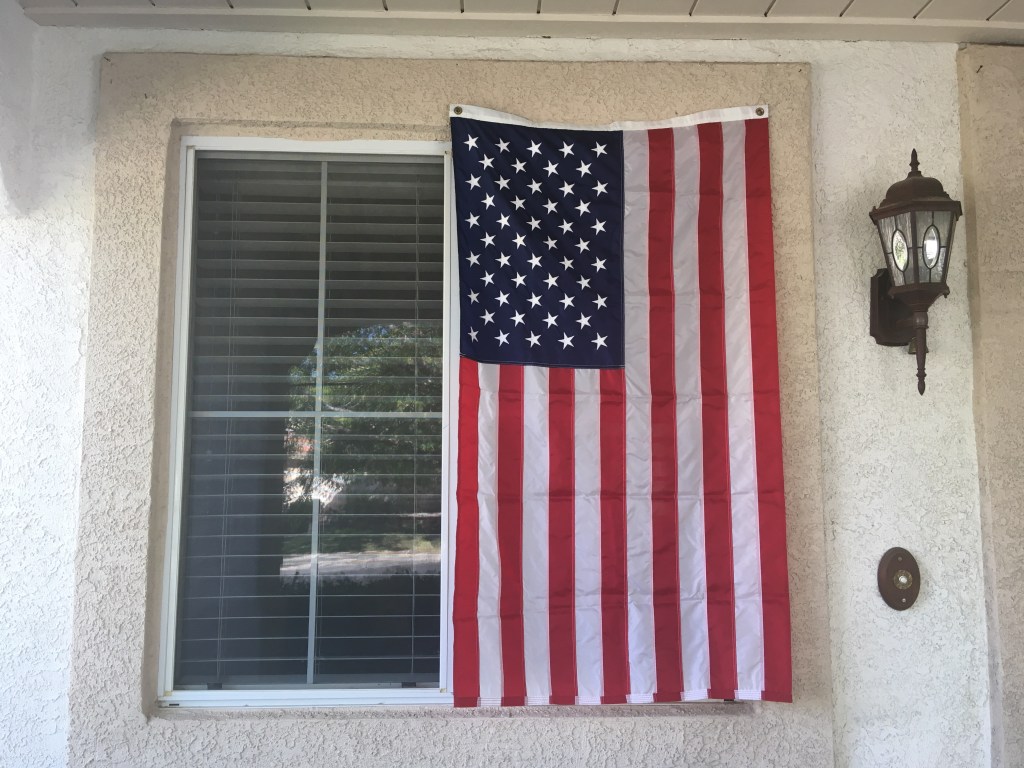
This is not the flag of nationalists and nativists, but of all Americans, of every origin and walk of life, dreaming, striving, working together to form a more perfect union, one where those famous self-evident truths by which we measure ourselves become ever more evident in our daily lives. So when we say, “Let’s do better,” it’s not un-American; it IS America.
#BLM #MATH #BeWell #GoldenRule #HappyFourth
– Greg Blake Miller
The Response

When media outlets label these anxious days “America in Crisis,” as an (otherwise solid) NBC special did last night, it’s important they state clearly that the crisis is not the protests, but the virulent racism that made the protests necessary.
Even then, it’s possible that the exclamatory language of “Crisis!”—in conjunction with endless imagery of police on the street in full riot gear—is a sort of dog whistle to those who believe that dissent is fundamentally dysfunctional. In reality, dissent is a social immune response, the swelling of the body politic at the site of a wound. In the best-case scenario, the result is health that is not only renewed but transformed—a hardier society with greater resistance.
As we’ve all learned in the national biology lessons of the Covid era, immune systems can be capricious; the response can overwhelm the body. But we’ve also learned that without any response, our bodies are playgrounds for pathogens. In the body, as in the nation, the proposition becomes this: Resist or perish. The question is, what is a properly calibrated resistance? What kind of response leads to sustained health?
Media discourse—both verbal and visual—that proposes the false equation “protest = crisis” misreads both the cause of our national pain and the course of our recovery. The real prognosis, while still provisional, may be be better than the discourse is letting on: Dissent, on the whole, might be doing the job it’s meant to do, the one the founders had in mind when they established the rights of free speech and assembly.
If the protests remain peaceful—which is not to say passive—we should (should!) see the language of crisis subside as the media and the nation realize that we are witnessing not only sustained dissent but the birth of a sustainable movement for a more just America.
Next step, voting. Beyond that, policy.
– Text and illustration by Greg Blake Miller
American Crossroads

At some point, when the embers cool on the street and the news channels move on from the 24/7 coast-to-coast feed, the image we’ll need to remember is the one that started it all—the murder of George Floyd.
We will need to memorialize Floyd not only with tears, but with policy. The policy must not end with a revision of police procedures; it must include a rethinking of the American community. We can no longer consign entire neighborhoods, regions, races to the American Upside-Down in which the achievement of some modicum of stability, peace, and security is the stuff of against-all-odds TV movies. We must at last acknowledge that access to quality housing, healthcare and education is not a privilege but a right—the place from which a healthy society is born.
Food, shelter, health and learning are the proverbial bootstraps by which we keep telling Americans to pull themselves up. An America that cannot or will not allocate the resources for these bootstraps and yet continues to call itself the land of opportunity is a nation in the killing grip of delusion. We have a choice before us: concerted, optimistic action or defeatist self-destruction.
How, exactly, will we choose to make America great?
– Greg Blake Miller
Turning Off My Phone at Midnight
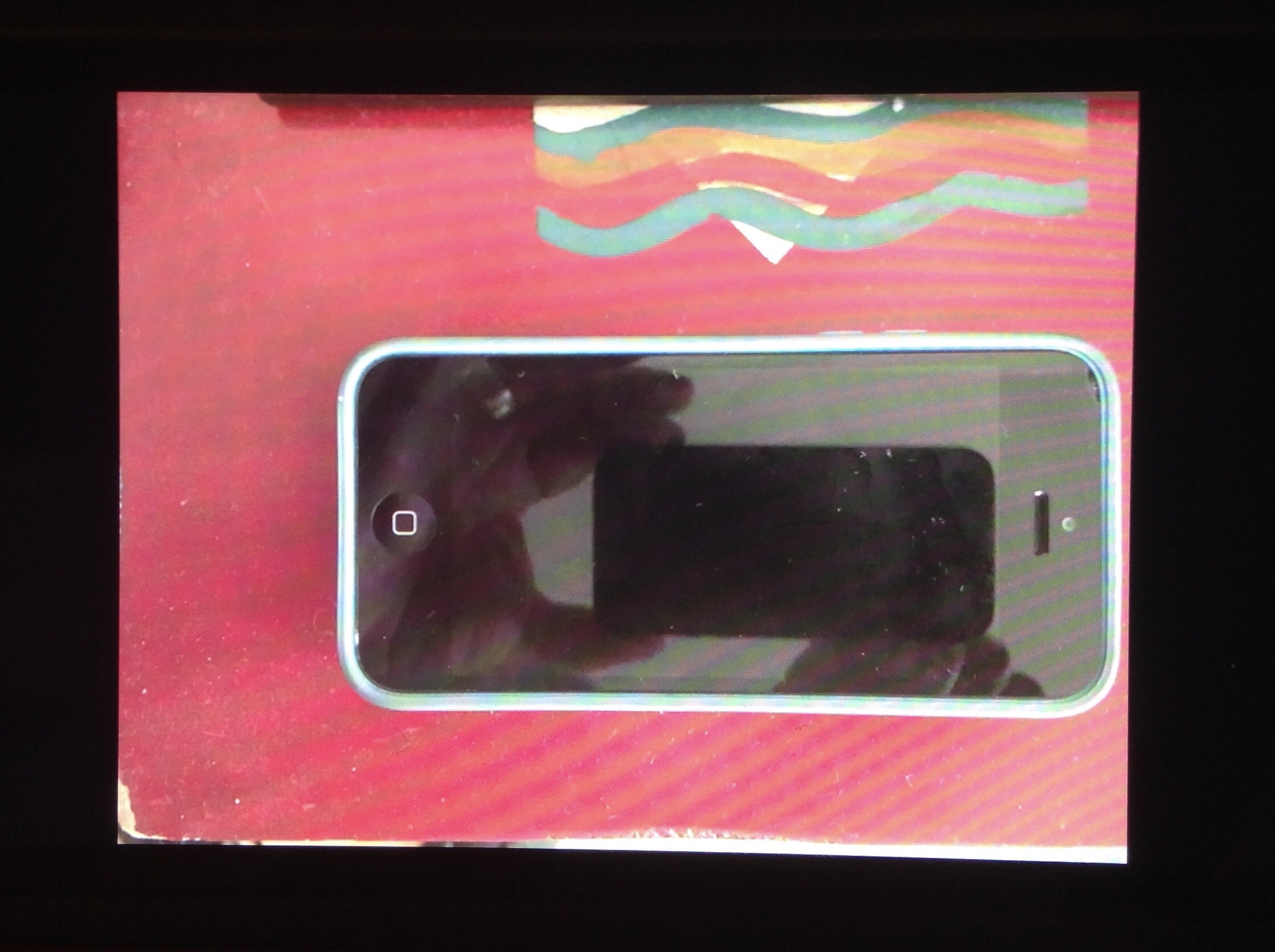
Staggered and beaten by pixels,
I fade, float, try to sink into warm cavelike analog darkness,
Blue light swimming on the walls,
My eyelids invaded by the inhuman outer glow of information,
Endless, bottomless, underworld stuff
Devoid even of the spirit of Hades,
Immaterial material,
Materialism without material,
Nothing tactile to reform or remake or melt or beat into ploughshares,
Weapons of inner war now securely tucked inside my mind
To deny even the independence of my disobedient dreams,
The dreams of a beaten man,
A man beaten by the infinite contents of his own pocket.
– Greg Blake Miller
Authoritarianism Made Easy!
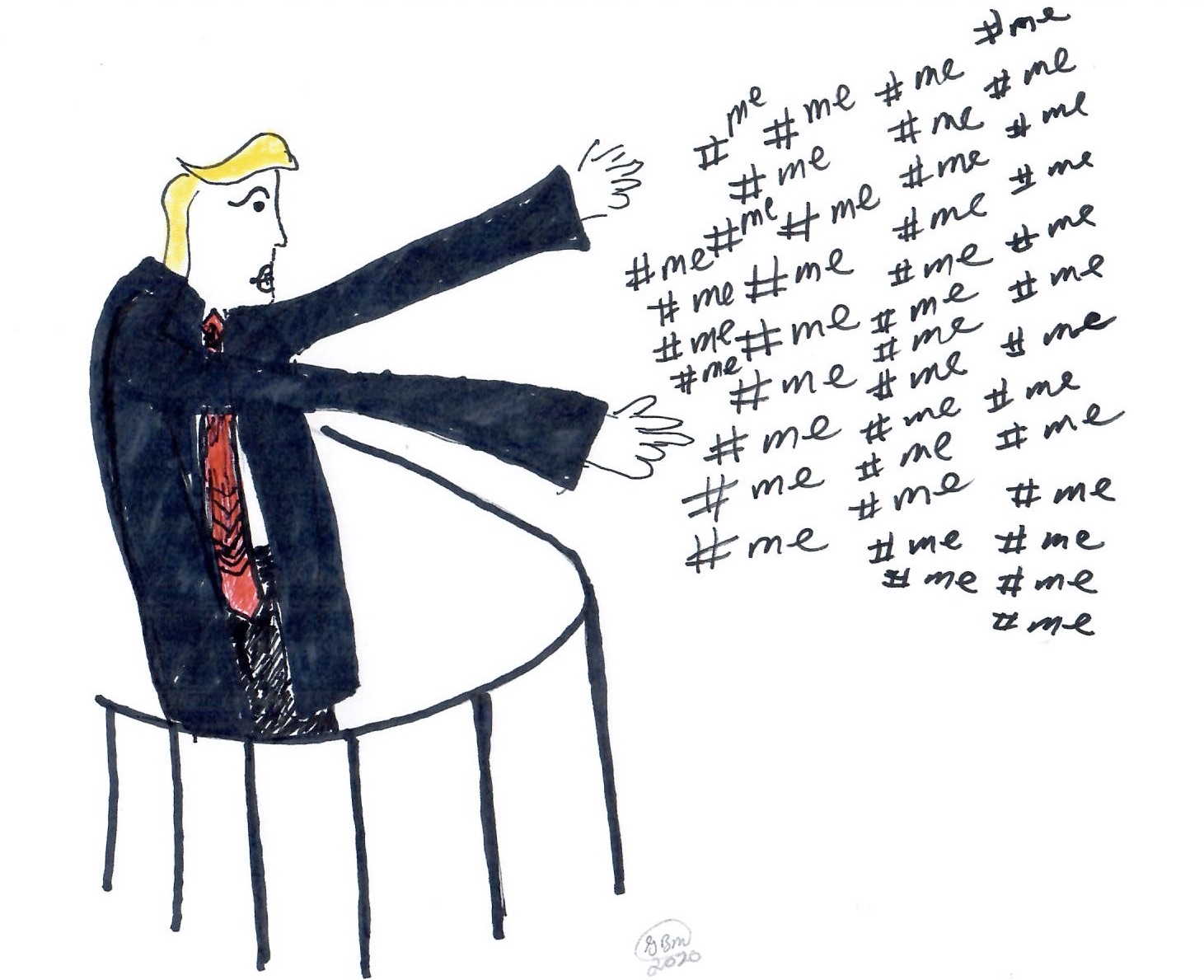
I know what you’re going through: You want to be an authoritarian, and it’s just taking too long. Here’s a secret: While you’re busy listening to the so-called “experts,” reading up on the Establishment’s “classics of authoritarianism” and deciding on your authoritarian “belief system,” others are cutting out the waste and actually being authoritarians. Think about it: You’re TRYING to be an authoritarian, while they’re actually living the authoritarian life. They’ve simplified their goals, clarified their message, and taken action on their dreams.
Well, now it makes sense to ask, “What do they know that I don’t?”
I’m here to help.
Today I’m going to let you in on what I’ve learned in decades of successful authoritarianism. Most aspiring authoritarians are wasting time and money on old-school “solutions” like authoritarian policymaking and crafting coherent authoritarian ideologies. With my simple seven-step program, you’ll learn secrets that can save you valuable energy that would be better used on the things you really want to do, like attacking enemies and watching television. These techniques have been used by successful authoritarians the world over. Don’t take it from me, take it from the well-known dictator Josef Stalin, who used these techniques in such brilliant managerial moves as The Campaign Against Trotskyites and The Denunciation of Rootless Cosmopolitans.
The simple tools I’m going to teach you work whether you consider yourself “right” or “left” or even simply “wrong.” True authoritarians know that these directional signals are window-dressing, the result of years of squandered energy in pursuit of old, tired ideas such as “justifying my draconian actions” and “building a seemingly coherent intellectual rationale for a crackdown.” If you’ve been spinning your wheels on such projects, you know that the only “right” is “I’m right” and the only “left” is “You’ve been left behind.” Don’t miss the opportunity to learn our PowerOfPower7™ Secrets today. No less an authority than the renowned authoritarian Adolf Hitler agreed with Stalin on these seven simple steps—and those guys couldn’t agree on anything. Well, there was that once, but we’ll blame that on Molotov and Ribbentrop.
This is the beginning of a journey that will allow you to overcome your inhibitions, silence your rivals, and bend the arc of history whichever way you damn well please. Why wait? Let’s get to the first Seven Steps!
Authoritarianism Made Easy, Lesson One:
Ridding Yourself of Rivals: Setting up Scapegoats in the Power Structure
- Assert authority. | You alone can fix it!
- Delegate authority. | Work smarter, not harder!
- Renounce responsibility. | It’s not your fault!
- Denounce those to whom you’ve delegated. | It’s their fault.
- Inflame the people against rival power bases. | Leverage the power of blame!
- Assert authority. | You alone can fix it.
- Purge rival power bases. | Winning.
With these simple steps, you’ll be dispatching enemies within days. Don’t waste time taking responsibility when you can be taking power! By putting these lessons to use today, you’ll take your first step* toward The Power of Power™ and impact countless lives in your community, or what’s left of it.
*Just for you we have a very special offer available today only: Write to us with your name, e-mail address, and checking account number, we’ll send you, at no cost, Lesson 2: Becoming Your Own Public Disinformation Officer.
– Text and illustration by Greg Blake Miller
There Will Be No Game Today
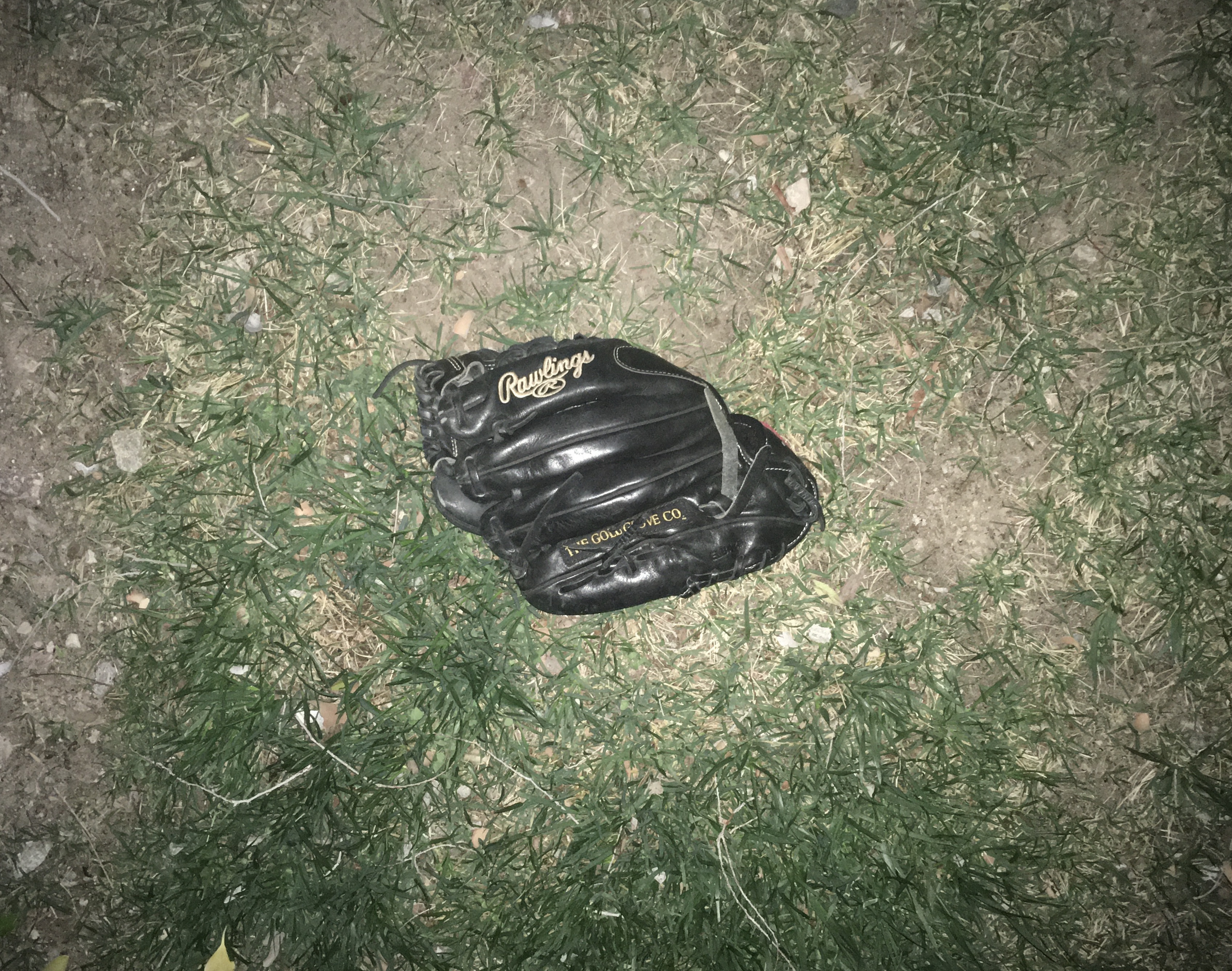
The spring of 2020
Is the player to be named later,
Left out of the headlines,
Which promised a bargain
For our side.
But these stories
Were based on insufficient data.
The reporting was incomplete,
Whether out of laziness
Or simple humanity:
Who knew?
Who knew that
When the deal was completed
It would turn out
That the Other Side
Had gotten everything.
– Greg Blake Miller
The Rebels’ Run to Glory, 1990
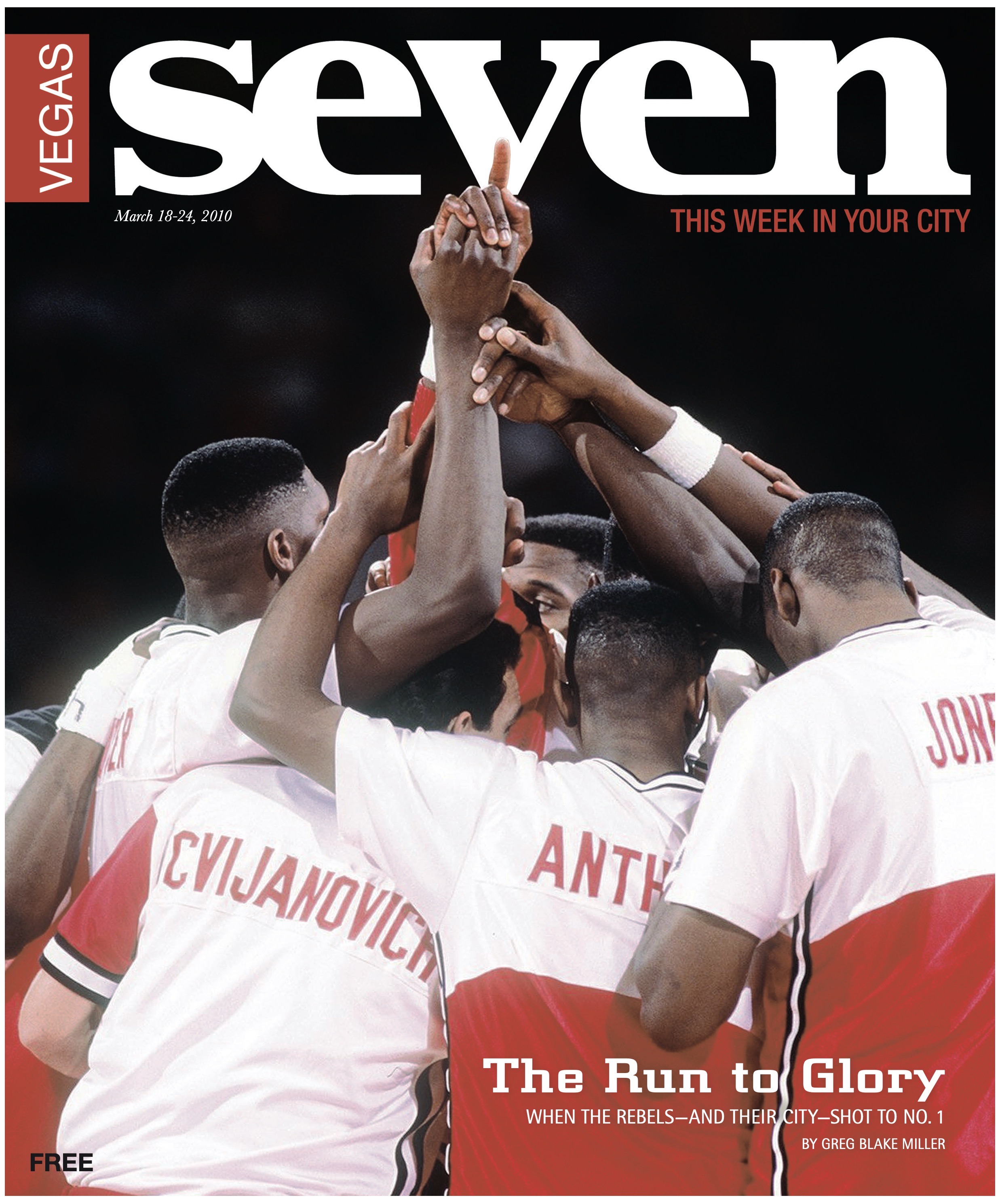
Thirty years ago today, a team, a coach, and a city forged a dream of “electric togetherness.” Read “The Rebel Alliance,” the story behind the 1990 UNLV men’s basketball team’s run to glory.
Dept. of Flying Time: I wrote this feature in 2010 for Vegas Seven to commemorate the 20th anniversary of the victory, when the city was in the doldrums of a very different crisis. Now, as then, we could use a little of that old electric togetherness—with appropriate social distancing, of course!
Be safe, be strong, be well!
– Greg Blake Miller
The Escape

They seemed so sure just who I was
And just where the winds would take me
And just what I dreamed when I slept alone
Beneath the willow tree
And that the blossom in a young girl’s eyes
Like a gypsy dream revealed tomorrow
And even the streetcorner saints
Wished me well on the path
I was sure to follow.
And they cleared the road
And swept the dust
But it clouded my vision
And I just saw hands
Grabbing, taking, giving with strings
Dreaming their dreams
In my unsure skin.
On desire’s rickshaw I rattled ahead
Upon their gladly burdened shoulders
And the city of gold glistened before me
And I glimpsed the crown that I would wear
And I turned with a start and tumbled out
And scraped my knee on sandy ground
And wound my way through crowded streets
And disappeared among the unknowns
And at the end of the path, the place I sought:
Before me, green grass, and a place called home.
– Greg Blake Miller, July 23, 1993
 Reentry Shock