History Once Looked Different: On the 35th Anniversary of the Failed Soviet Coup, a Look Back Through a Double-Lens
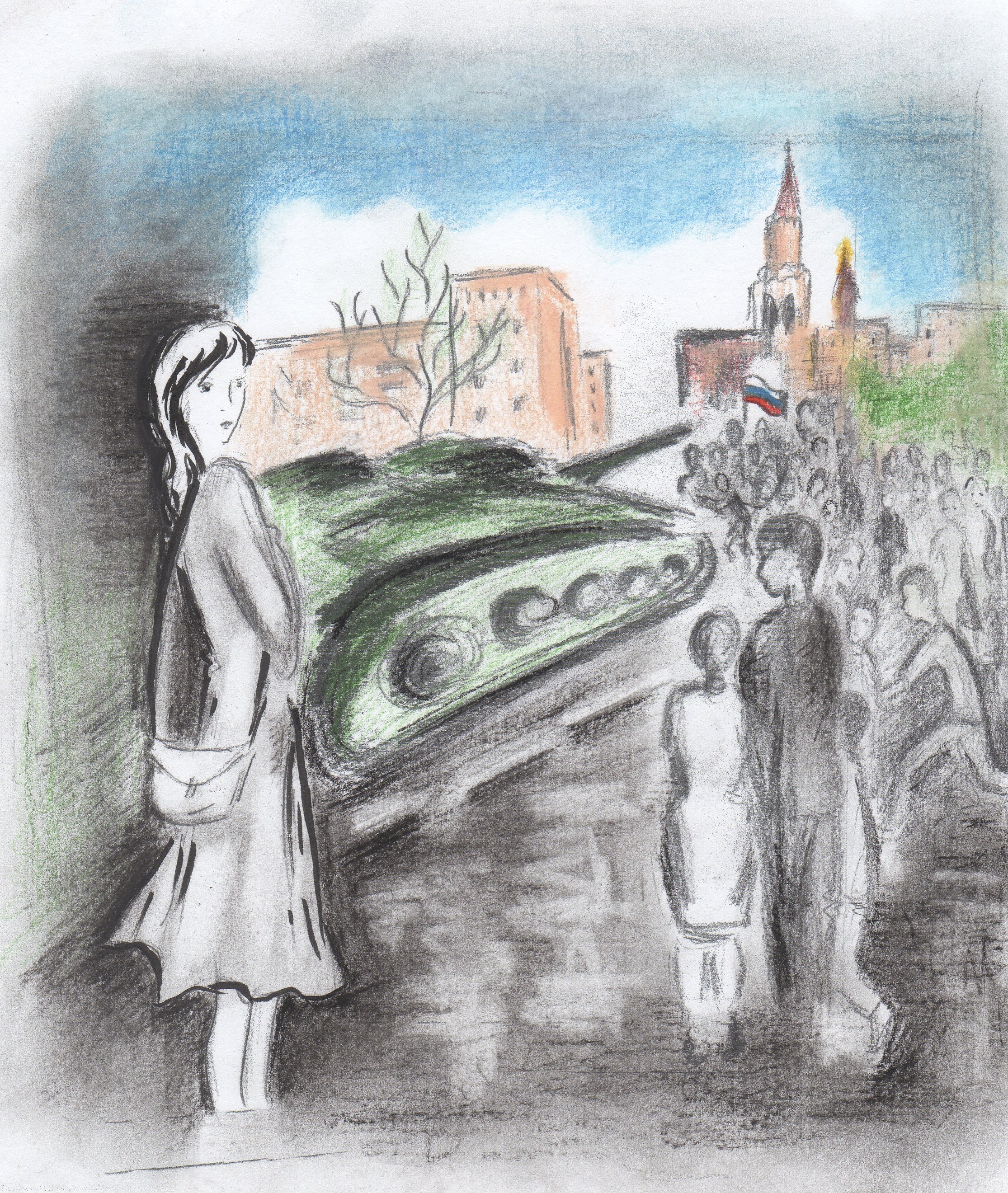
Thirty-five years ago, a miracle took place: the cobwebbed and shaking hands of authoritarianism reached up from the soil, tried to regain power, and failed so utterly that the tombstone of the Soviet experiment was soon engraved with a date of death. The numbers 1917-1991 would come to mean different things to different people living in the crumbled communist empire, but for many they meant that the air had been, or at least was being, cleared for something new. If you squinted just right at the scene in Red Square, as supporters of democracy rallied and Boris Yeltsin (for the moment, freedom’s avatar) stood atop a tank, fist clenched in solidarity, you could make out the outlines of a future different from all the other “futures” in Russian history—one where human dignity came first. My wife, Svetlana, was in Moscow that day (we would not meet for another five years), and the moments, both personal and public, remained indelible for her. In 2011, on the 20th anniversary of the failed coup, she wrote an essay recalling the uncanny mix of the grand, the mundane, the frightening, and the triumphant that unfolded on the streets and in the kitchens of Moscow. You can read her essay, “Three Days to Freedom,” below.
History was already beginning to look different by 2011, but today it is almost unrecognizable. In the 1990s, the fruits of freedom brined in a miasma of corruption, poverty and disorder. In the 2000s, even amid winking prosperity, those fruits (to belabor the metaphor) were canned and shelved by an increasingly authoritarian Putin regime. In the 2010s, new protests against authoritarianism rose and were crushed. On Bolotnaya Square in 2011-12, the triumph of 1991 was not to be repeated. The heirs of the putschists had learned their lessons all too well. Russian supporters of democracy, already marginalized and mocked, were now often hunted, jailed or forced into exile. While to the south another of the successor states to the Soviet Union, Ukraine, was trying to shake off the mildew of the post-Soviet mafia state, Russia plunged deeper and deeper into the underworld to which the putschists of ’91 had been impermanently consigned. Fear had proven stronger than freedom.
The Putin regime watched with a combination of abject horror and preening arrogance as a viable and free alternative model struggled to life in Ukraine. What the Ukrainians—independent since 1991—sought was not only a more actualized form of national self-determination but the resurrection of the hopes that were sparked during the heady days of the failed coup, the hopes for human self-determination. Putin’s security state looked across the border at the shadow of all it had been repressing and saw a movement that, if successful, could stir the hearts of Russians, too—the spirit of August ’91. And Putin chose the only path that such men can choose: to kill it.
What he did not understand, but should have, is that freedom fights back.
– Greg Blake Miller

